Case study
Gathering precision data in coastal geology using a multiple-method approach
Dunkerque France
Client
Eoliennes en Mer de Dunkerque (EMD)
Project duration
July 2024 - September 2024
We successfully gathered detailed subsurface data to support the wind turbine foundation design for Dunkerque offshore wind farm, a major renewable energy project off the coast of France. This project, once complete, will feature up to 46 wind turbines, expected to produce around 2.3 TWh of electricity per year. The site is characterised by NE-SW oriented sandbanks, which required a bespoke approach to ensure we could capture the precise data that our client needed, whilst navigating around the sandbanks.
Planning, feasibility, conceptual design
Design
Construction
Operations and maintenance
Decommissioning
Show full process
Navigating site challenges to deliver actionable insights
The Dunkerque offshore wind farm site presented geological challenges. Our initial site risk assessment revealed subsurface conditions shaped by NE–SW-oriented sandbanks, notably the Binnen Ratel Bank and Dyck Oriental.
We worked closely with Eoliennes en Mer de Dunkerque (EMD) to develop a targeted investigation strategy. This involved selecting and sequencing the most appropriate methods to reduce uncertainty and maximise insight. We deployed a combination of geophysical measurements, cone penetration tests (CPT), and gyroscopic surveys to derive a robust characterisation of the subsurface. Each technique was selected to address specific engineering requirements, and the resulting data directly informed decisions around foundation design, material selection, and construction planning.
Targeted techniques for reliable subsurface characterisation
To overcome the site's geology and deliver data that would directly inform design and risk mitigation, we applied a suite of complementary investigation methods.
Geophysical measurements played a key role in building a clear picture of subsurface conditions. Cased and open checkshot surveys provided high-resolution velocity data, essential for accurate seismic interpretation. Primary and secondary wave analysis helped differentiate geological layers, while natural gamma logging, both cased and open, enabled precise lithological identification, particularly useful for characterising shale content.
CPT offered continuous soil profiling. Direct push and downhole CPT measured tip resistance, sleeve friction, and pore pressure, delivering detailed insights into soil behaviour. The use of dedicated seismic cones added shear wave velocity data, which was critical for assessing soil stiffness and dynamic response, key factors in foundation design.
To ensure positional accuracy and optimise instrument placement, we conducted north seeker gyro surveys. These provided precise casing location data and enhanced the reliability of seismic CPT positioning, contributing to more efficient and accurate data acquisition.
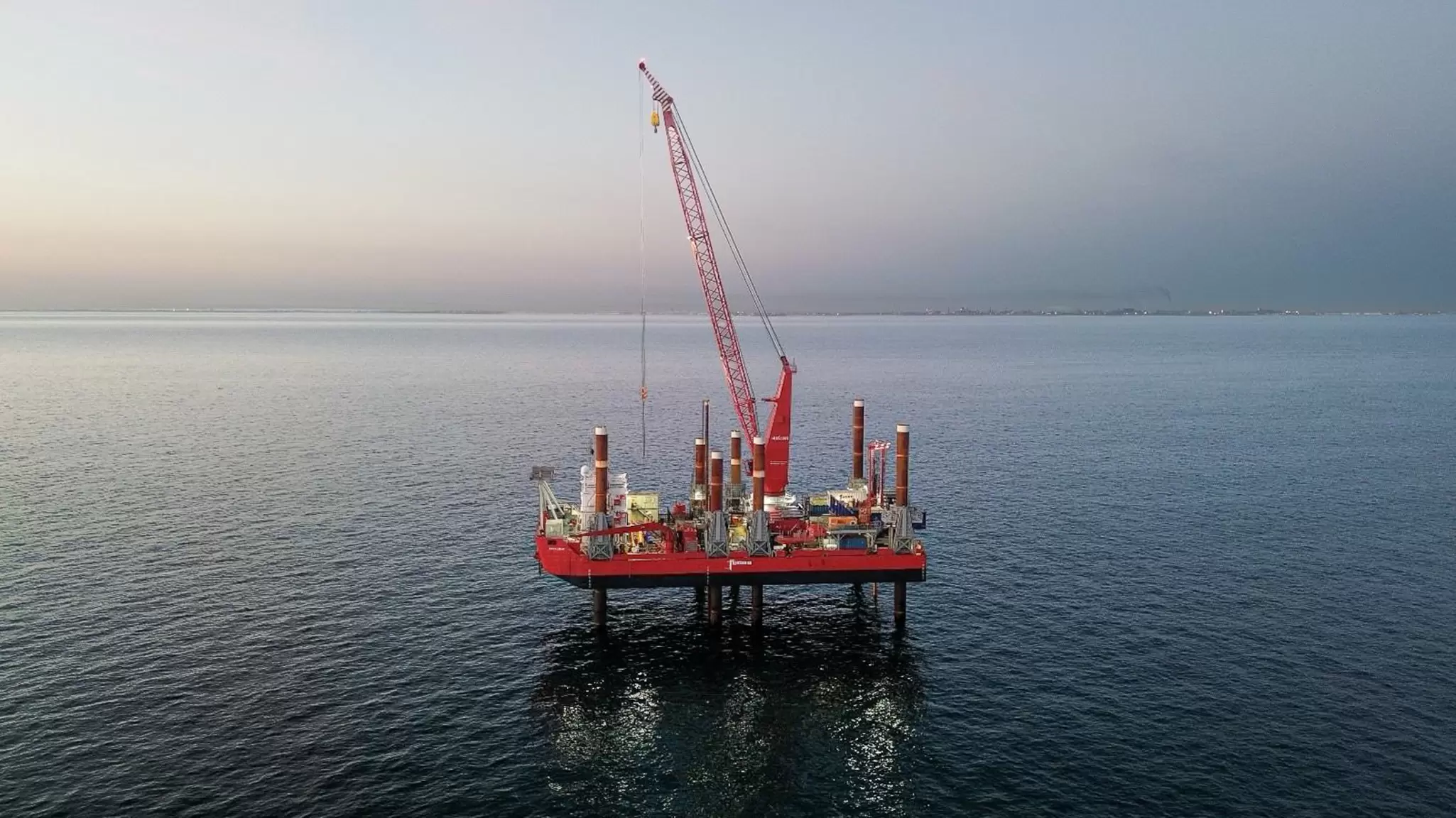
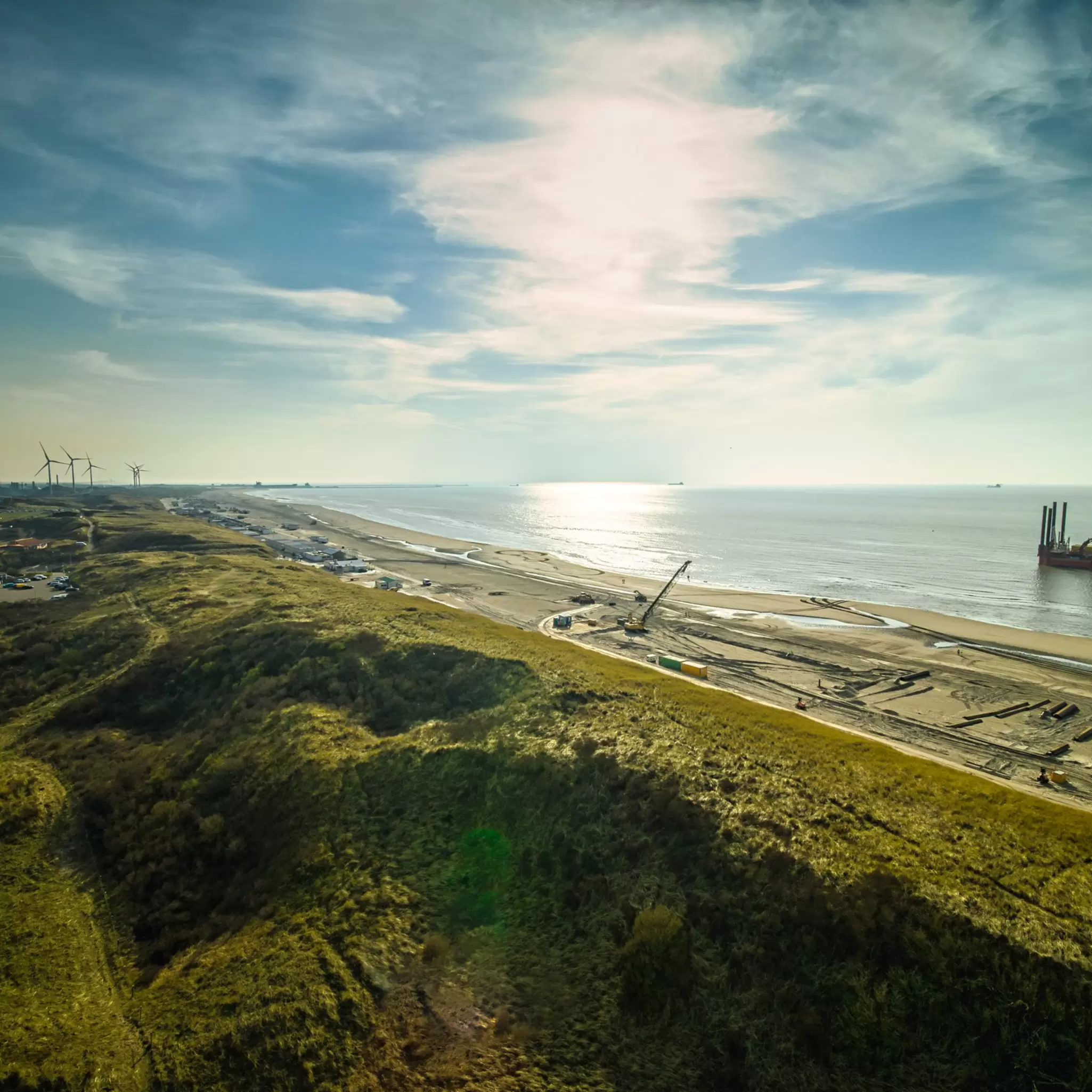
Figure 1 - Excalibur jack-up barge in Dunkerque
Scope of works:
Primary investigation (first points 45 metre depth)
5 x CPT and seismic CPT
5 x pseudo-static load testing
3 x seismic CPT
3 x check shot surveys
Wireline geophysical tests
Secondary investigation (second points 40 metre depth)
5 x continuous sampling and coring
In situ testing downhole geophysics
Laboratory testing
Soil classification
Strength and compressibility tests
Innovative flexi-deck
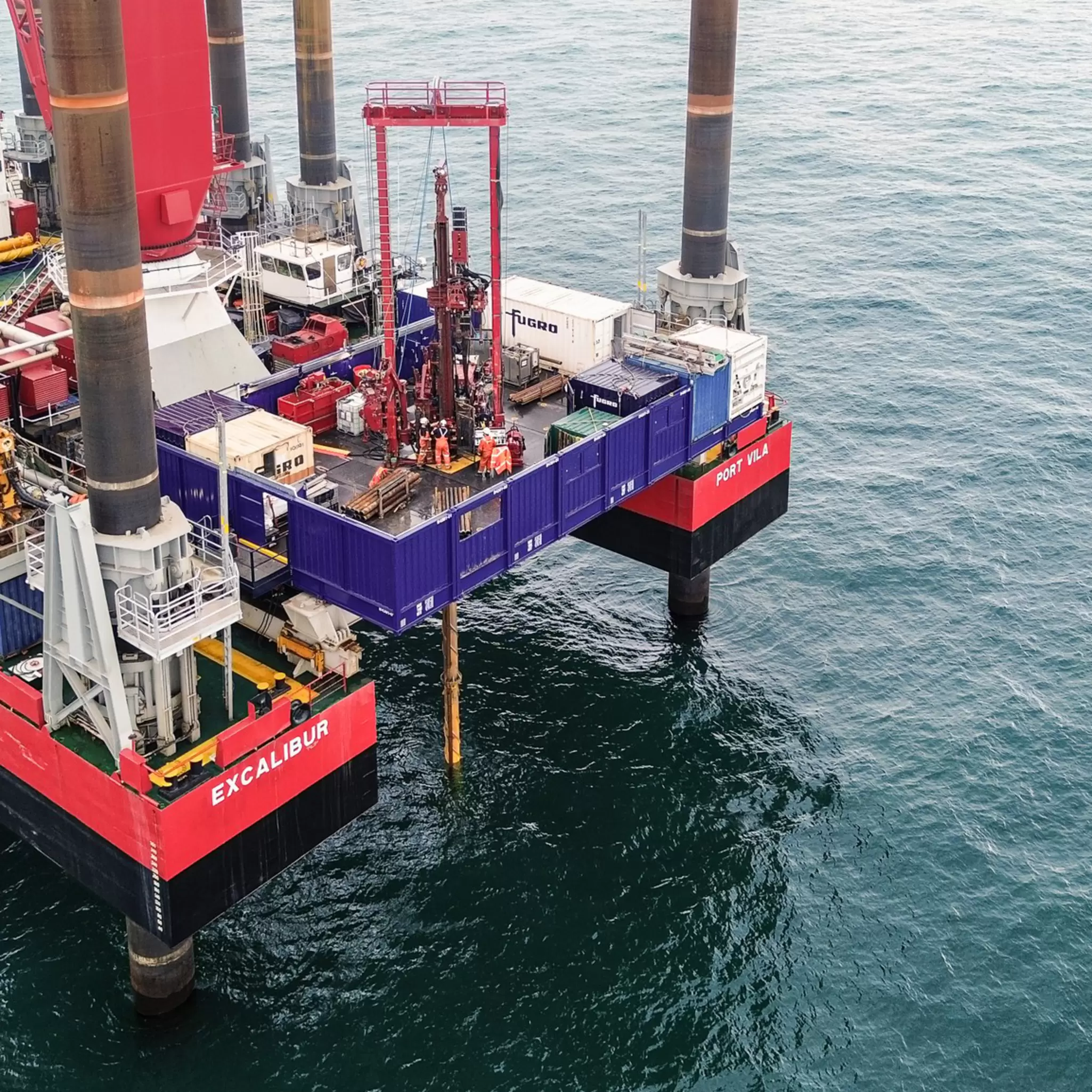
To support the demanding offshore operations at Dunkerque, we deployed our purpose-built flexi-deck system on the Excalibur jack-up barge (JUB). Engineered for both safety and efficiency, the 19.5 metre x 12.1 metre sliding deck with a 300-tonne safe working load enabled streamlined geotechnical workflows in challenging conditions. The platform’s stability also allowed us to perform self-boring pressuremeter testing with high accuracy in both dense sand and high-strength clay, ensuring reliable data acquisition critical for project success.
The flexi-deck’s integrated cellar deck allowed hydraulic, electrical, drilling water, and gas mitigation systems to be routed below the main deck, significantly reducing trip hazards and maintaining a clear, organised workspace. Safety was further enhanced through noise-shielding side walls, flush lashing eyes for secure equipment fastening, and built-in casing clamps and handling tools that supported safe and efficient assembly and disassembly.
Operational efficiency was a key focus. By positioning the geotechnical laboratory and core storage adjacent to the drill, we reduced core handling time and enabled direct sample processing. The flush deck design supported mechanical handling aids, improving sample throughput and reducing manual labour.
A dedicated seabed frame equipped with reconfigurable logging instrumentation and calibrated global acoustic positioning system (GAPS) ensured precise seafloor targeting. The sliding working platform allowed multiple geotechnical samples to be taken without repositioning the barge, saving valuable time and increasing data density. Combined casing and checkshot deployment further reduced operational time, while automated seismic CPT and USBL positioning minimised manual intervention, improving both safety and data quality.
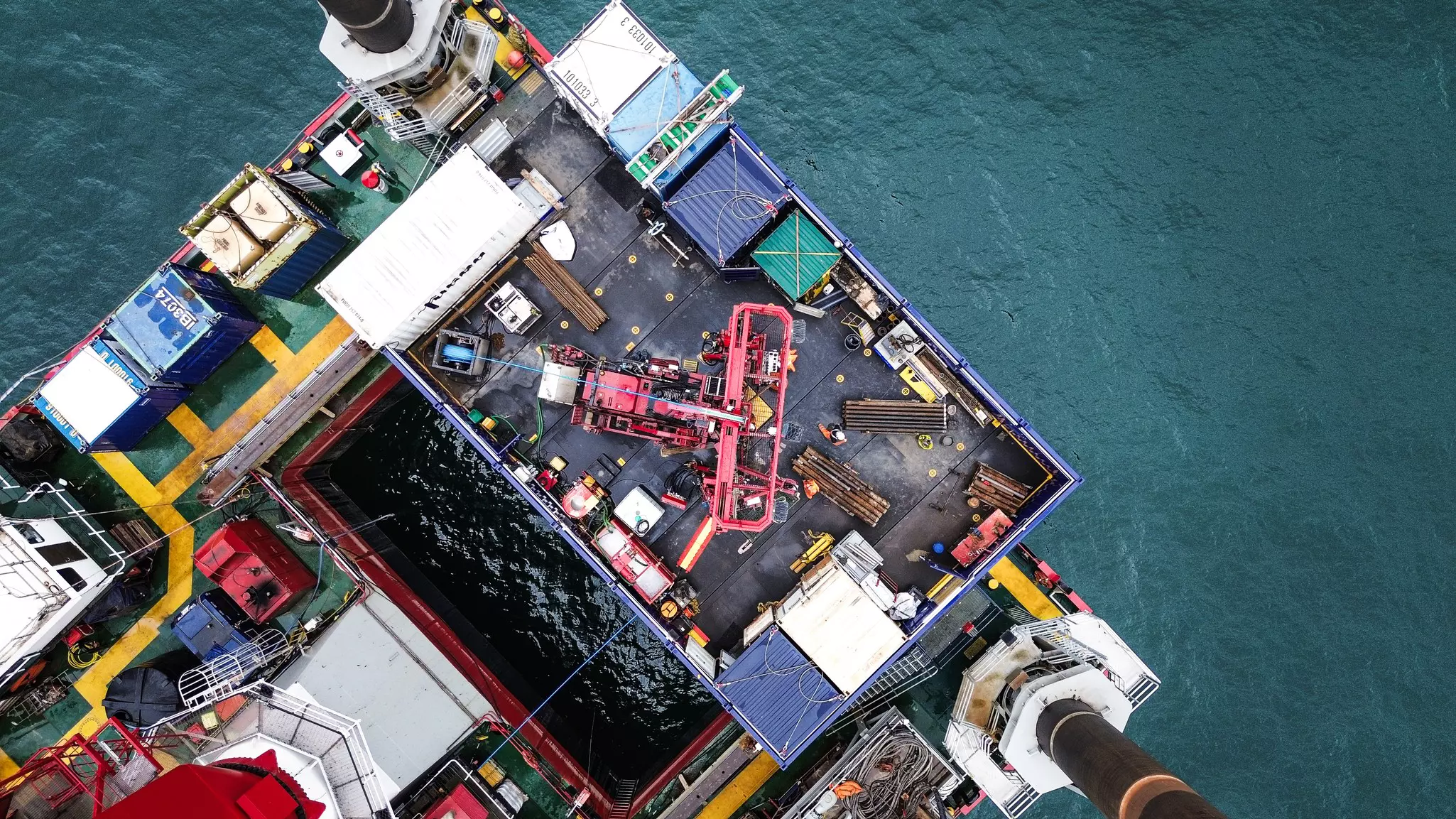
Figure 2 - Flexi-deck on Excalibur jack-up barge
Conclusion
Our ground investigation for the Dunkerque offshore wind farm exemplifies innovation, precision, and safety. We were able to collaborate with our client to design the best approach, addressing the site and leveraging advanced techniques and technologies to successfully deliver highly accurate subsurface data. This project highlights our technical expertise and commitment to understanding our clients’ needs to provide the best solution.
Contact us
Find out more
Rod Eddies
Global lead - Geotechnical ground investigations
Our expertise
Coastal infrastructure
Supporting the development of coastal infrastructure is key for the progression of renewable energy projects in the UK.