Pressuremeter Testing – Onshore and Offshore
Pressuremeter testing gives exceptionally reliable, in situ measurements of how soil or rock will actually behave under load. A pressuremeter (such as an HPD) expands directly within the borehole to capture true stress-strain response. The result is high‑quality data on deformation, strength, and stiffness - exactly the parameters engineers need for optimised foundation design (e.g major construction, windfarms, mining etc). With this data, designers can reduce uncertainty, optimise foundation sizing, and often cut construction costs through more precise, site‑specific geotechnical models.

David Tindall
In Situ Testing Senior Operations Supervisor
What is pressuremeter testing?
A pressuremeter is an in situ testing tool that can be lowered into a borehole to collect direct measurements of deformation and stiffness on different soil and rock types. There are different types of pressuremeter depending on the geology to be tested.
The test depends on 3 parts of the probe: the membrane, the ‘arms’ and the pressure cells. As the membrane inflates, these calibrated sensors measure the expansion and pressure against the borehole walls.
In simple terms - in softer geology the ground will deform and the arms will expand at a faster rate relative to pressure increase. In harder ground, the pressure will increase and the expansion of the arms will be slower. You can see examples of a soil and a rock test below under ‘what does a pressuremeter test look like’.
What are the different types of pressuremeter and what soil types are they suitable for?
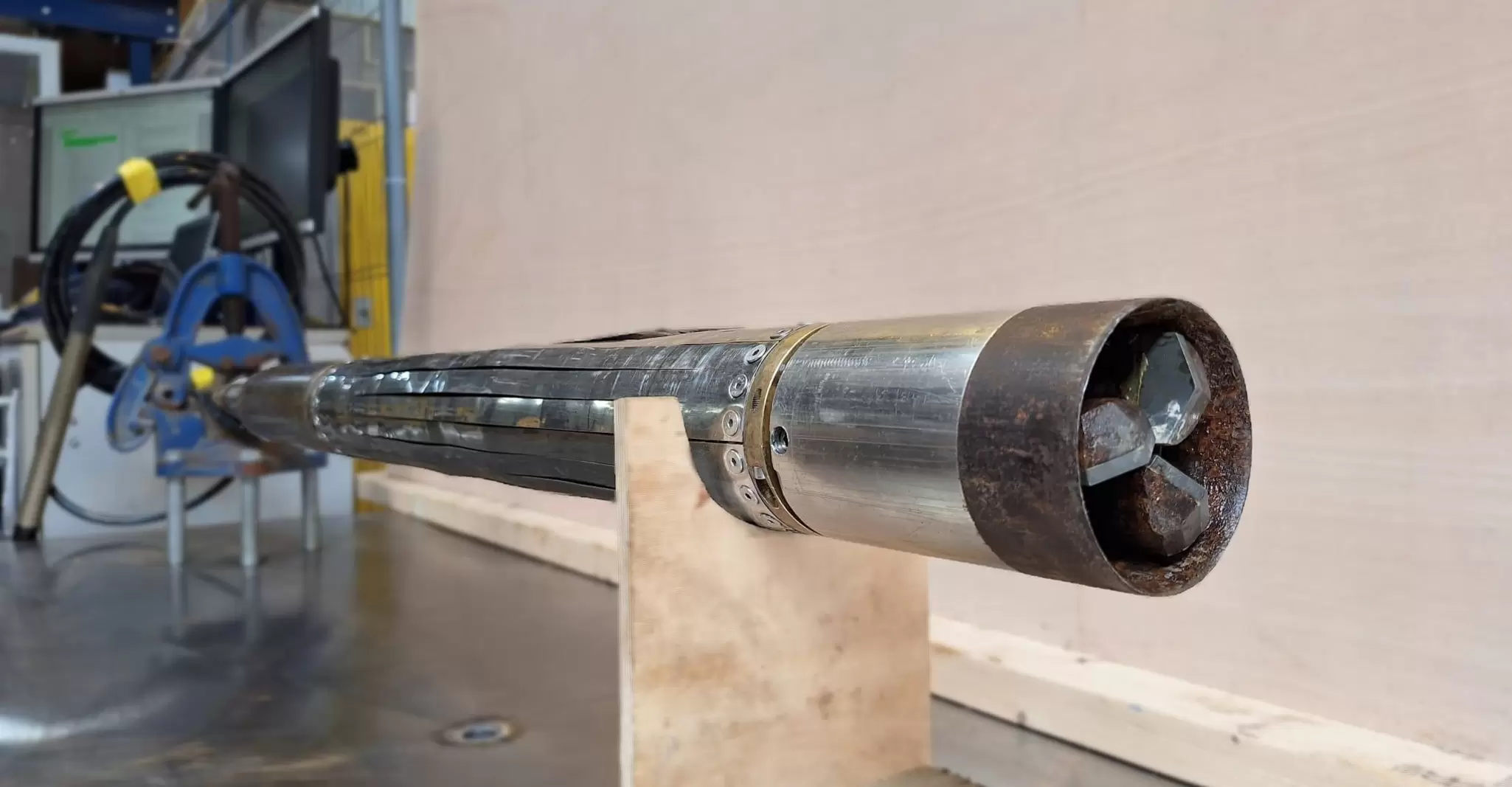
High Pressure Dilatometer (HPD)
The HPD is suitable for a wide range of geology from clays to rock. It requires a pre-bored pocket of 1.5m to 3.0m length, often drilled with a T6101 barrel. The HPD probe is lowered in to the pocket and therefore requires pocket stability for successful insertion. In unstable ground, a self-boring pressuremeter may be more suitable.

High Pressure Dilatometer (HPD)
Key facts:
Diameter 95mm
Maximum pressure 20 MPa
Maximum arm expansion 20mm
Self-Boring Pressuremeter (SBP)
The SBP is best used in soils (with minimal gravels). The probe has a cutting shoe and drag bit/rock roller and is bored into the virgin ground. As the ground is minimally disturbed, the data is of the highest quality. In more competent material, a HPD may be the preferred option.
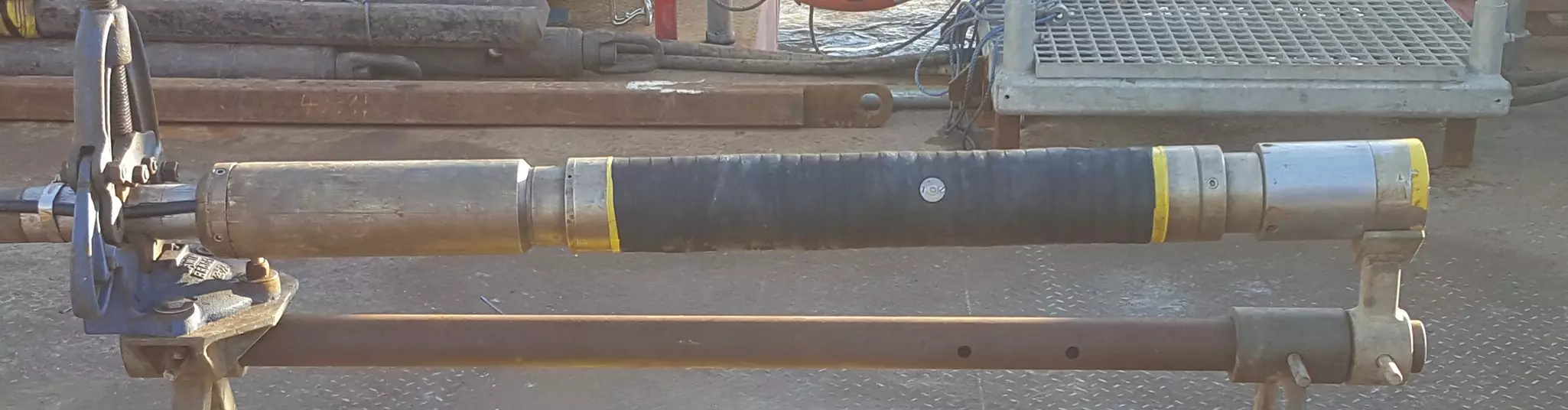
Self-Boring Pressuremeter (SBP)
Key facts:
Diameter 88mm
Maximum pressure 10 MPa
Maximum arm expansion 6mm
Reaming Pressuremeter (RPM) and Cone Pressuremeter (CPM)
The RPM/CPM can be used in very soft soils to weak/weather rock. It is inserted using hydraulic cone penetration testing (CPT) rams or inserted into a pre-bored/pre-pushed pocket. The RPM becomes a CPM when a CPT cone is added to the end. This allows us to perform combined CPT pushes with pressuremeter tests during pushing or retraction of the cone.

Reaming Pressuremeter (RPM) and Cone Pressuremeter (CPM)
Key facts:
Diameter 47mm
Maximum pressure 10 MPa
Maximum arm expansion 10mm
Menard Pressuremeter and Marchetti Flat-Plate Dilatometer (DMT)
Menard Pressuremeters measure fluid volume and pressure rather than radial displacement. DMT is a flat plate probe with circular membrane. It is pushed into the ground using hydraulic rams and can be used with seismic module.
What does a pressuremeter test look like?
The pressuremeter test plots displacement of the arms against pressure inside the probe. The pressure increase is controlled by the operator, and the displacement is the reaction of the ground to that pressure. During the test, the operator will perform unload/reload cycles where the pressure is temporarily reduced and then increased. These are often referred to as ‘loops’. Displayed below is an image showing an example of a pressuremeter test plot.
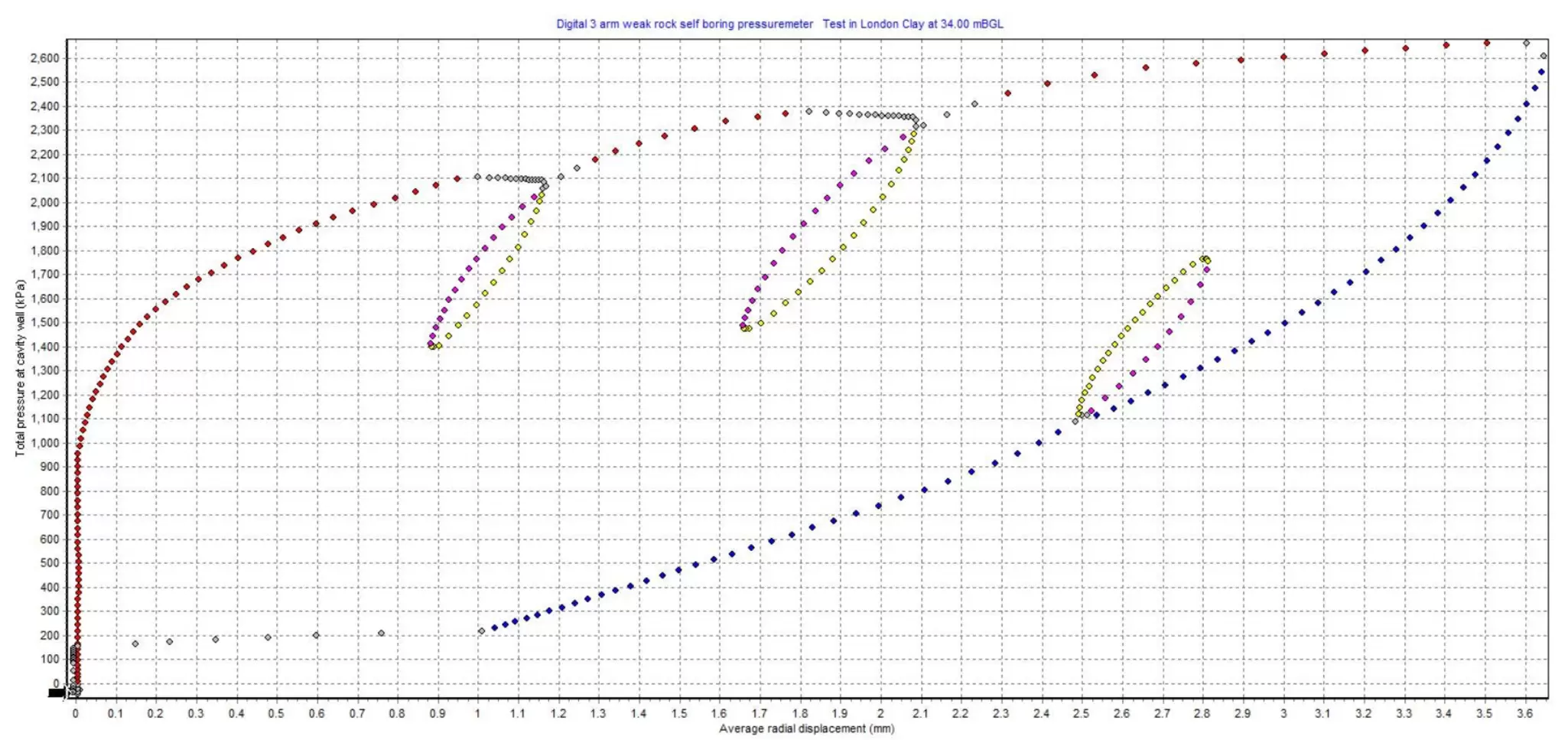
Self-Boring Pressuremeter (SBP) Test Plot
What operational environments can each type be used in?
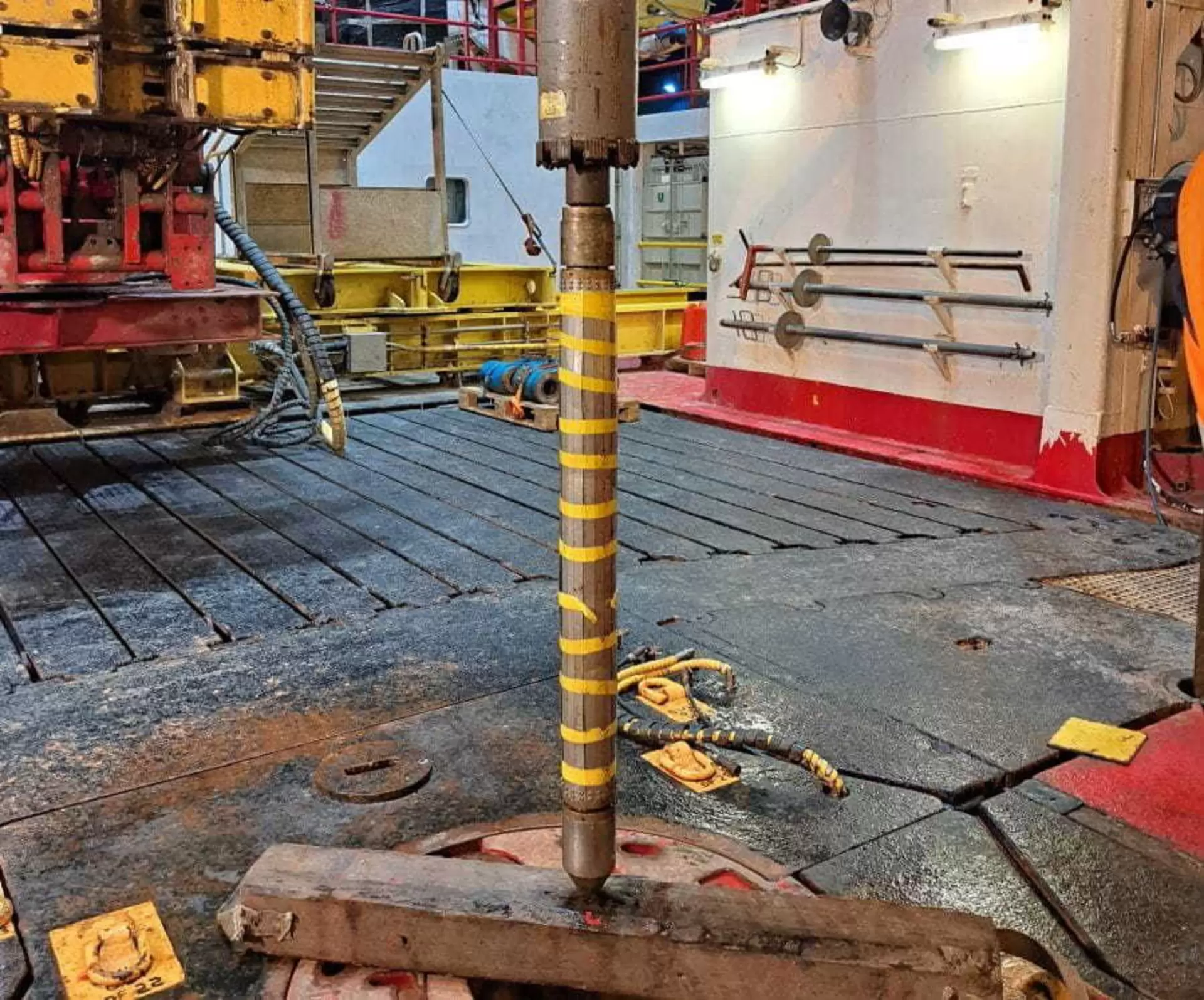
Most pressuremeters can be used in a range of environments and at Fugro we use them on land, on nearshore jack-up platforms and on offshore vessels. The HPD and RPM can be used in all these scenarios. The SBPM can be used on land and on jack-up platforms.
For onshore and offshore HPD testing we have a wireline deployment method which has significantly reduced the time required to run a test, particularly on vessels. For offshore use, we also have a wireline system for the RPM that allows us to test in a pre-pushed pocket made using Wison CPT.
More Information About Pressuremeter Testing
What parameters do pressuremeters measure?
Depending on the ground conditions, soil properties and insertion method, the pressuremeter analysis can vary. There are several types of analysis providing a wide range of measured geotechnical parameters including:
The in situ horizontal stress, with several types of analysis available to estimate this. This allows pressuremeters to be one of the leading and most accurate tools in providing this parameter.
Yield stress
Initial shear modulus
Shear modulus
Variation of stiffness with strain curves, i.e., a stiffness degradation curve over small strains (typically 0.01%-1%)
Strength parameters:
Undrained shear strength
Frictional strength properties such as the peak angle of internal friction, the peak dilation angle and an estimate of the constant volume friction angle
Other parameters can be derived, including but not limited to, Young’s modulus, the coefficient of Earth pressure at rest (Ko), the over-consolidation ratio (OCR), Rigidity index (Ir).
What are the benefits to pressuremeter testing?
Provides direct in situ stiffness, strength, and stress–strain data.
Collects high quality data that captures true ground behaviour with minimal disturbance.
Measures deformation characteristics directly in the borehole.
Eliminates or reduces costly and time-consuming sampling and laboratory testing.
Supports more reliable geotechnical engineering, modelling and design decisions.
Recognised in Eurocode 7 and carried out under BS EN ISO 22476.
Why should I use pressuremeter testing on my project?
More Accurate, Site‑Specific Design
Accelerated Schedule
Reduced Construction Costs
Lower Project Risk
Improved Predictability of Ground Performance
Compliance With Standards
Benefits
Decades of Experience
Trusted partners with years of experience managing in situ site investigation, conducting advanced pressuremeter tests to inform geotechnical design.
Test in a Wide Range of Environments
A global team of experts that understand ground conditions in a wide range of environments, from onshore to offshore, in geology from soil to rock, with advanced measurement and reliable data.
All Probe Types
With experience spanning hundreds of projects, Fugro is equipped with the essential tools and probe types to test and understand ground conditions to a required depth.
Industry Insight
Fugro is committed to creating a positive impact in every project, supporting core industries including infrastructure, offshore, energy and critical minerals to achieve business objectives.
Come join us
Exciting challenges. Unforgettable experiences. Work that helps create a more safe and liveable world. These are a few of the things you’ll find at Fugro. Will you join our global team?