Reducing our Environmental Impact
Fugro is constantly working on reducing its environmental footprint. We are committed to minimising our environmental impact across our global operations and driving meaningful change, with a key focus on cutting carbon emissions.
Why are we doing this
Companies play an important role in achieving the global reduction of greenhouse gas (GHG) emissions needed to limit climate change and its impacts on people and nature. Fugro’s operations are no exception. Our activities result in GHG emissions, mainly from fuel consumption by our vessels and, to a lesser extent, from other assets used for Geo-data collection, as well as from emissions within our supply chain.
We recognise our responsibility to minimise these impacts. To do so, Fugro is implementing a range of solutions that support decarbonisation across our operations and value chain, leading to emissions reductions and environmental sustainability. Ultimately, our strategy drives towards our goal of achieving our roadmap towards net zero in 2050.
Solutions
As part of our sustainability efforts to reduce our environmental impact, we focus on three strategic areas:
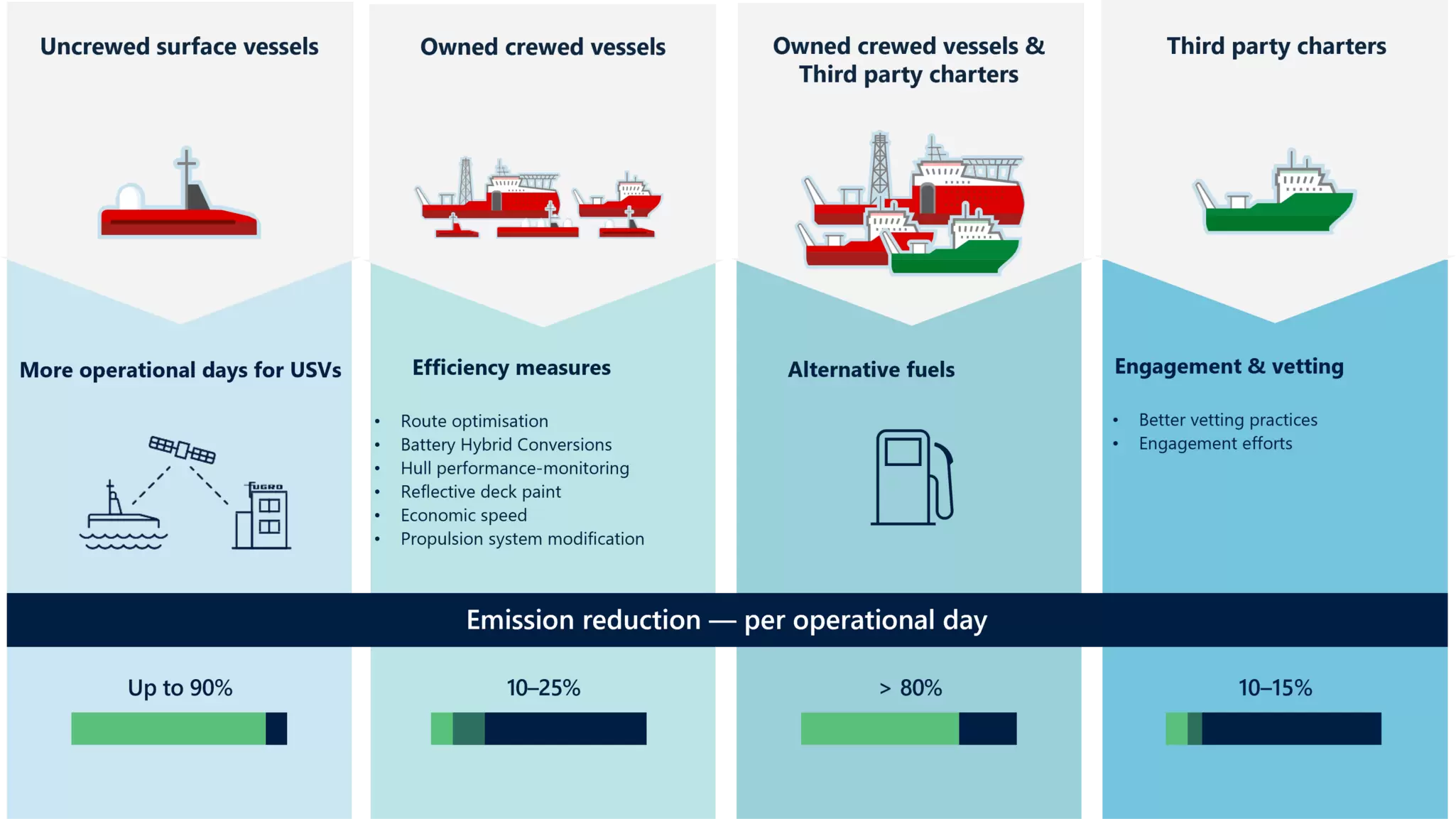
Deployment of uncrewed surface vessels (USVs): Our remote-controlled uncrewed vehicles deliver up to 90% lower fuel consumption compared to conventional survey vessels, significantly reducing emissions while improving safety and operational efficiency.
Transition to low-emission marine fuels: To reduce the emissions intensity of our marine operations, we are increasing the use of low-emission fuel alternatives such as green methanol and HVO (Hydrotreated Vegetable Oil) across our fleet.
Electrification and operational efficiency: By adopting cleaner technologies and optimising our processes, we are making our operations more sustainable. This includes innovations such as optimised ground investigation solutions that reduce emissions and minimise soil disturbance.
Net zero
These solutions are the key drivers in achieving our ambition of becoming net zero by 2050. Our net-zero targets have been validated by the Science Based Targets initiative (SBTi). To ensure we meet this ambitious target and reduce the environmental impact of our own operations, we have introduced a clear roadmap that guides us step by step, enabling us to reach net zero by 2050.
Net-zero roadmap
Fugro’s net-zero roadmap aims to reduce the environmental impact of its own operations. Since 89% of Fugro’s combined scope 1 and 2 GHG emissions are from vessels (both owned and chartered), transforming the group’s vessel fleet to low-emission operations is essential and requires significant multi-year investments. Scope 1 emissions cover Fugro’s direct operations, which includes the running of our vessels, drill rigs or other vehicles. Scope 2 emissions are also direct operations, covering the purchased electricity used in our offices or warehouses. Scope 3 emissions are indirect emissions relating to the entirety of Fugro’s value chain; they can cover a variety of topics, from business travel and employee commuting to purchased goods and services from our suppliers.
For details on Fugro’s transition plan for reducing our scope 1, 2 and 3 emissions, and the related initiatives to achieve this, please see our latest annual report.
You can find out more details on our SBTi validated targets in full.
Sustainability
It's not just a 'nice to have' for Fugro, it's pushing our company forward and helping us achieving net zero emissions by 2050. The work we do contributes to helping those in other industries, be it infrastructure, construction, oil and gas or navigation, achieve their net-zero emissions objectives. Today, we prioritise sustainability across all of our services, aligning our company values with the projects we're involved in every day and protecting the world we live in.
What we do at Fugro
The more you know, the smaller the risk