Transforming offshore geotechnical investigations: the benefit of wireline pressuremeter testing
Published
21 May 2026
Authors
Robbie McCall, In Situ Test Project Engineer
Dave Thomas, UK Land Resource Centre Manager
In recent years, the quest for sustainable offshore infrastructure, particularly in offshore wind development, has pushed innovation in geotechnical investigations. These projects require precise, high-resolution data about the seabed to design safe, efficient, and cost-effective structures. Traditional approaches involve significant manual handling which is time-consuming and inefficient. As projects expand into more challenging environments, advanced techniques such as pressuremeter, alongside improvements in drilling and cone penetration testing (CPT), open the door to smarter, more sustainable investigations
The challenge: efficiency and accuracy in offshore testing
Over the past few decades, methods of deploying CPT and drilling equipment inside a drill string were vastly improved using wireline techniques, replacing traditional rod-based deployment. However, pressuremeters continued to be deployed in the traditional way. This traditional approach, though tried and tested, is time-consuming and inefficient. Each deployment and retrieval involves significant manual handling, which not only slows down operations but also exposes crews to risks and limits the number of tests that can be performed in a given time. Weather constraints and the high cost of vessel time add further demands, often resulting in projects that overrun both budget and schedule.
Why does it matter?
The consequences of slow or inefficient geotechnical testing impact every stage of an offshore project. Without reliable, high-quality in situ data, engineers must rely on conservative assumptions when designing foundations, leading to over-engineered and more expensive structures. Longer testing campaigns inflate costs and increase the carbon footprint of operations. In some cases, the technical, environmental or economic barriers make investigations in remote or deepwater locations unfeasible. The need for a better solution has become increasingly urgent as offshore wind and other infrastructure projects expand into more challenging environments.
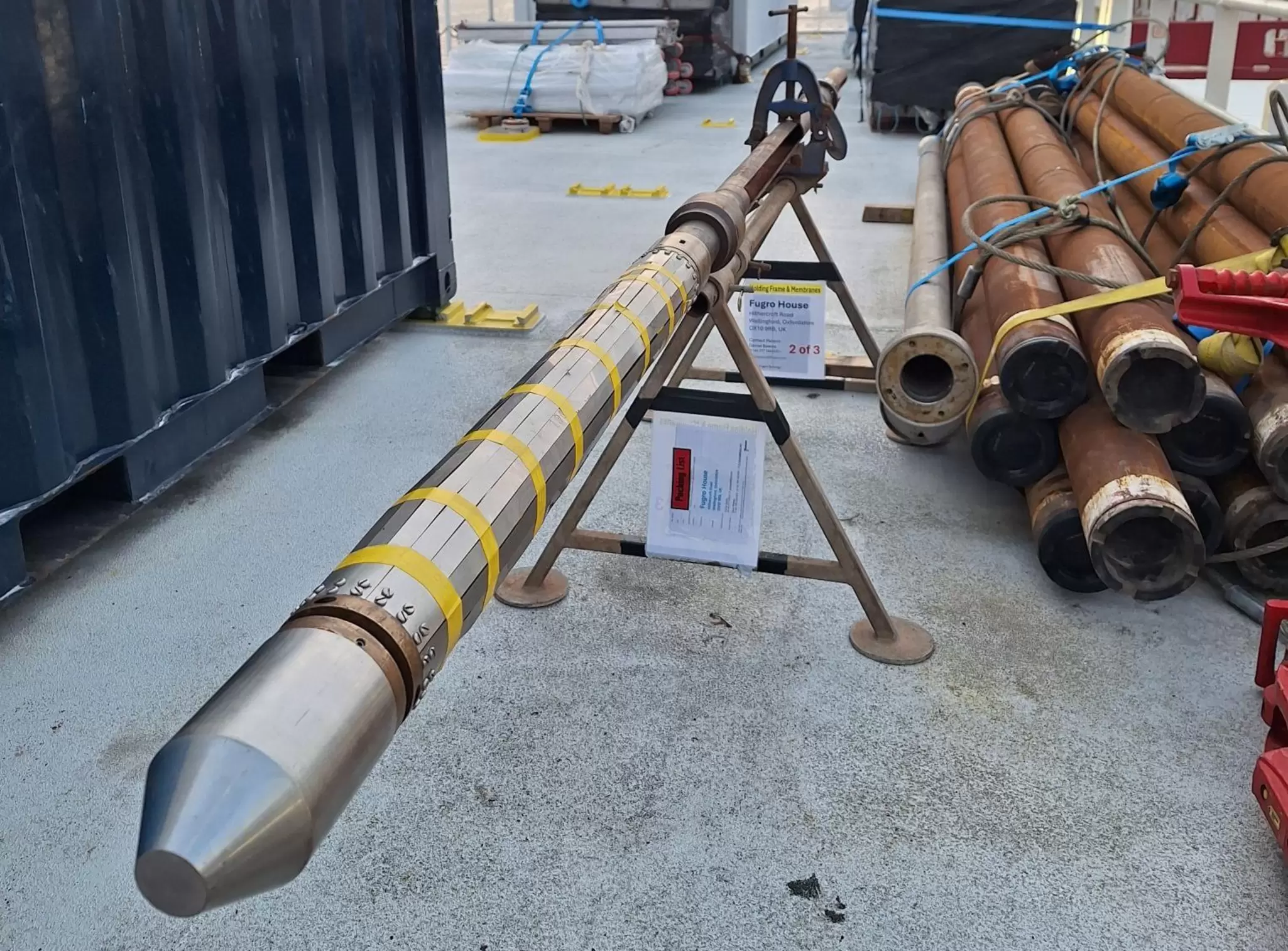
High pressure dilatometer and wireline deployment system assembled
Pressuremeter testing for offshore wind
As part of this solution, Fugro uses different kinds of pressuremeter to deliver a comprehensive suite of geotechnical parameters critical for advanced design and analysis, providing engineers with all the key information they need about the ground for designing offshore structures. A single test can determine the soil’s current stress level, its strength before failure, and the maximum pressure it can withstand. Additionally, we measure the soil’s resistance to shearing and observe changes in strength under varying conditions.
On top of that, our tests show how stiff the ground is as varying pressure is applied, which tells us how the soil will move or settle when something is built on top. One big advantage of this method is that it shows how the soil's stiffness changes as it is strained, from almost no movement at all to more noticeable shifts. This information is vital for predicting how the ground will behave in real life, helping engineers design safer and more reliable foundations.
Unlike tests done in a laboratory, our pressuremeter tests are completed in situ and measure the soil directly in its natural state, so we get a true picture of what is going on underground. This means better data for making decisions, reducing risks, and keeping costs down.
Engineering a solution: the rise of wireline pressuremeter deployment
We are now able to use wireline deployment technology, a system that enables pressuremeter tools to be lowered into boreholes without the need for traditional rods, allowing us to conduct pressuremeter tests in all environments. This single change has a cascade of benefits. By streamlining deployment and retrieval, wireline systems can cut operational times by up to 50 % compared to conventional methods. This not only reduces vessel time and costs but also minimises environmental impact. Crews have reduced manual handling, improving safety, and operations can continue in weather conditions that would prevent traditional coring.
Central to this transformation is the integration of our advanced coring systems, SEADEVIL®, which allows for the rapid acquisition of high-quality core samples and immediate transition to pressuremeter testing. This preserves the integrity of the borehole, which is a crucial factor for accurate measurements, and ensures that tests target the most representative soil layers.
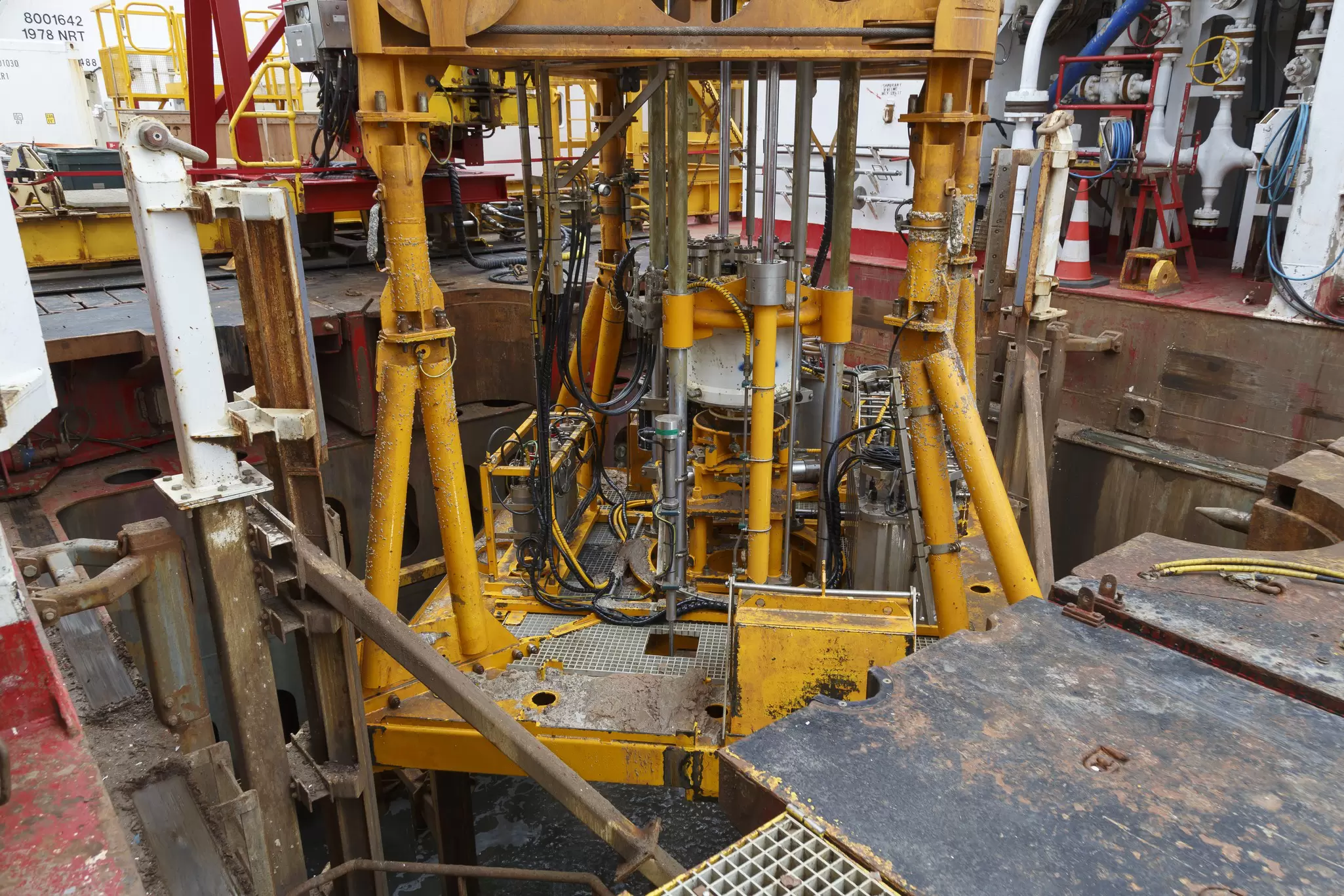
The SEADEVIL® coring system ready to be deployed
Putting innovation to the test: a case from the Irish Sea
The impact of these innovations becomes clear in real-world applications. On a recent offshore wind project in the Irish Sea, a site investigation originally planned to last three to four weeks was completed in less than two. Wireline deployment enabled 37 successful pressuremeter tests in this shortened timeframe. Not only did this save significant costs and vessel time, but the quality of data supported our client with a more confident, optimised foundation design. The project demonstrated that the new approach was not just faster but also more reliable, setting a new benchmark for future investigations.
Clarifying myths, misconceptions, and modern capabilities
Despite the success stories, several misconceptions persist around pressuremeter testing. There is some belief the technique is only suitable for soft soils, however modern tools such as high pressure dilatometers (HPD), cone pressuremeters (CPM) and reaming pressuremeters (RPM) are also designed to operate in dense sands, stiff clays, and even weak rock, reaching greater depths as a result of wireline deployment.
There are also concerns about the complexity of interpreting pressuremeter data, but advances in acquisition systems and software, like our VirGeo® data platform, now make real-time visualisation and automated analysis possible, simplifying the process considerably.
A common oversight is the importance of borehole quality. Poorly prepared or disturbed boreholes can lead to faulty results or failed tests. The ability to quickly transition from coring to testing, while preserving borehole integrity, is a crucial advantage.
Pressuremeter testing is not just about the tool. How it is deployed and interpreted by a project team is also a major factor which should not be overlooked. Fugro’s in situ testing team brings decades of field experience, deep understanding of tool behaviour in different materials and the ability to calibrate and troubleshoot the equipment onsite.
The bigger picture: impacts and industry evolution
Pressuremeter testing is widely recognised as one of the best methods for measuring in situ horizontal stress and other soil properties essential for foundation design. High-quality pressuremeter data supports more accurate, less conservative engineering, reducing both material costs and construction risks. As wireline systems become more common, the industry is shifting toward more data-driven, performance-based design, with clear benefits for sustainability and project confidence.
This approach also opens the door to projects that were once considered too remote, deep, or sensitive for traditional investigations. By enabling efficient, targeted testing, wireline pressuremeter deployment is making offshore and even onshore geotechnical investigations more feasible and less environmentally impactful.
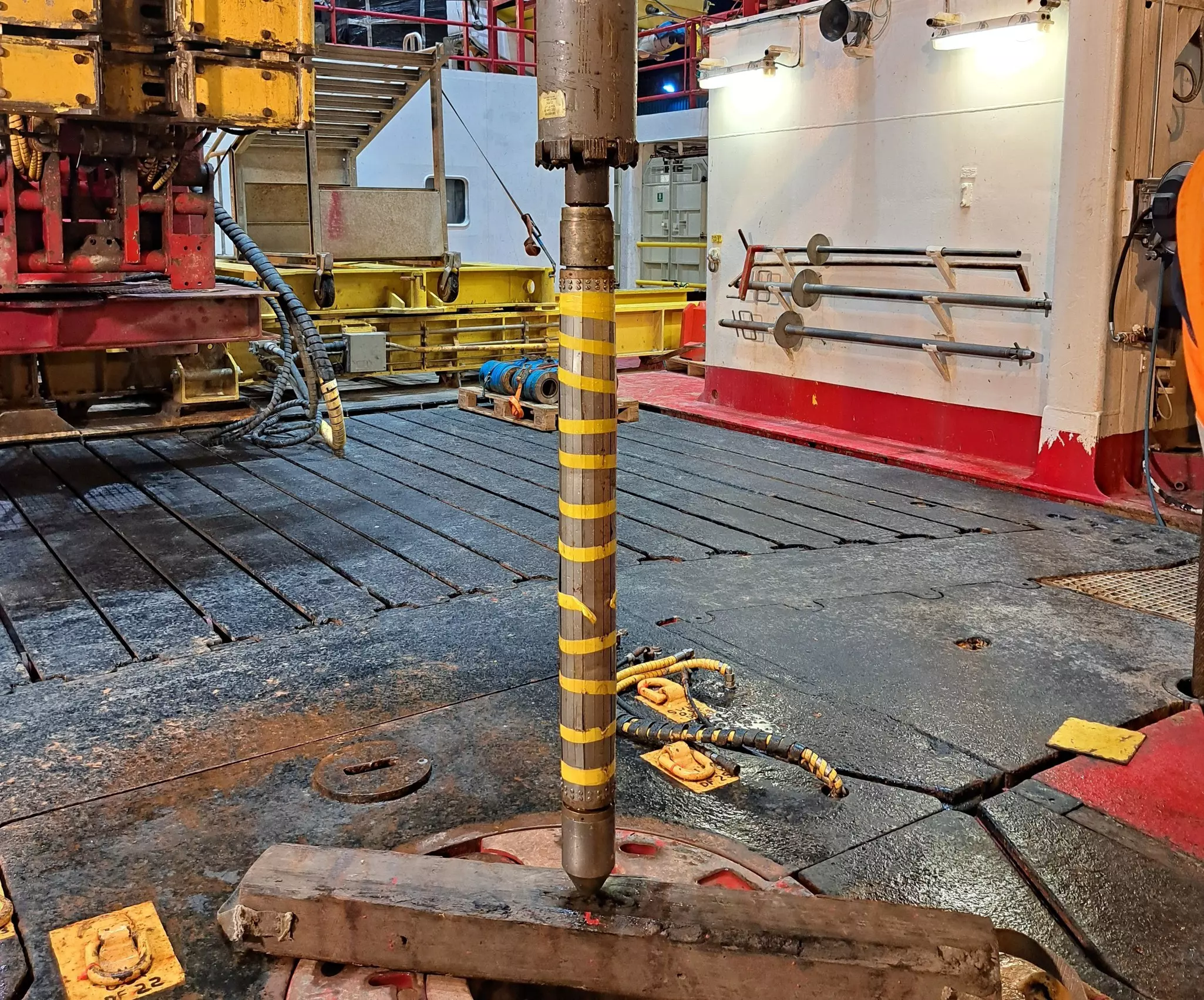
Wireline pressuremeter latched during dry testing
Practical advice for success
Plan pressuremeter testing early in the site investigation. Strategically locating tests to assess critical geological layers and interfaces is far more effective than adding tests opportunistically at a later stage.
Begin with a thorough examination of core samples to identify the most homogeneous zones for testing. Focusing on these areas minimises errors, such as membrane ruptures or difficulties in data interpretation, that can arise from variable material or extrusions.
Collaborate with experts during the design phase to ensure the right pressuremeter tool is selected for anticipated ground conditions. HPD offers versatility for weak clays through to moderately strong rock. For fine-grained granular soils in onshore or nearshore settings, the self-boring pressuremeter (SBPM) can collect high-quality data while minimising disturbance using conventional drilling techniques. For rapid deployment, the CPM is suitable for soft to stiff cohesive soils and for very loose to medium dense granular soils onshore or offshore. The RPM can be used for stiffer lithologies or weak rock.
Maximise efficiency through wireline deployment. This enables rapid tool deployment and retrieval, significantly reducing rig time—especially offshore or in deep boreholes. This approach also improves safety by reducing manual handling, making it a cost-effective and risk-reducing strategy, particularly in remote or challenging environments.
Looking ahead: automation and innovation
Automation and remote operations are becoming increasingly important, especially for deepwater and challenging offshore environments. Automated systems reduce manual intervention, improve safety, and allow for operations from uncrewed or minimally crewed vessels. As infrastructure projects expand into deeper and more geologically complex settings, pressuremeter testing is being adapted for high-pressure boreholes, such as in geothermal energy and carbon storage. By embracing innovative tools and practices, the industry continues to break new ground in the quest for smarter, more sustainable engineering solutions.
Contact us
Get in touch for

David Tindall
Global Lead - Electric Deep Drive®
Innovation
Electric Deep Drive®
Go safer, go smarter, go anywhere