Why we choose collaboration over competition
Published
03 Dec 2025
Author
Daniel Smith - Offshore Wind Biodiversity Solution Owner
A small red vessel motored out from the Dutch port of Den Helder, quietly cutting through the waves on its way to the CrossWind offshore wind site, without a single person onboard. The crew, remotely operated vehicle (ROV) pilots, and environmental scientists were all in Aberdeen, monitoring operations remotely. Some were from Fugro, others from our partners, but all shared the same goal: to understand how nature is responding to offshore wind.
This wasn’t just a technical achievement, it was part of BeWild, a collaborative research project focused on biodiversity in offshore wind. That moment captured something important. Technology enabled the mission, but it was collaboration that made it meaningful.
When I first stepped into the role of Solution Owner for Offshore Wind Biodiversity at Fugro, I naively thought that technology could solve all our problems. But I quickly learned that protecting nature, especially in the complex world of offshore wind, requires more than innovation. It demands collaboration.
In a competitive industry, the instinct is often to guard innovation. But the projects I’ve worked on have shown me that not only do we go further when we work together, but we also get there faster.
Nature is complex. So are the solutions.
The wonderful thing about nature is its diversity. It’s why so many of us love spending time outdoors and care deeply about protecting the natural world. But this same diversity is also what makes nature both fascinating and difficult to study. When we try to apply technology to understand nature, we need to be really clear about what problem we’re solving. And while it’s relatively easy to define a technical problem, capturing the full complexity of ecosystems is a whole different challenge.
At Fugro, we focus on translating scientific understanding into practical, scalable solutions. Our strength lies in taking proven science and applying it in real-world environments, bridging the gap between research and implementation to deliver meaningful impact in the field.
Often, this means working with publicly available data or contributing to shared scientific efforts. Of course, this approach raises questions. I’m usually asked, “Why would we invest in something that’s publicly available? Doesn’t that give our competitors a leg up?” But the answer lies in the value of shared progress.
Listening to the ocean: Bioacoustics in action
A great example of why collaboration matters is our work in bioacoustics. Porpoise, dolphin and whale species make different sounds. Some of these sounds are unique to specific species, while other sounds are very similar across species. To detect their vocalisations in acoustic recordings and then classify these sounds to a specific species is challenging.
Fugro’s Bioacoustics Lead, Marta Bolgan, worked with acousticians from the Scottish Association for Marine Science (SAMS) who identified the best available open-source (or publicly available) algorithms for detecting different species. Then one of Fugro’s innovation teams, led by Juan Liria Fernandez, used their expertise in cloud computing and digitalisation to run these detectors in the cloud, which sped up the analysis process considerably.
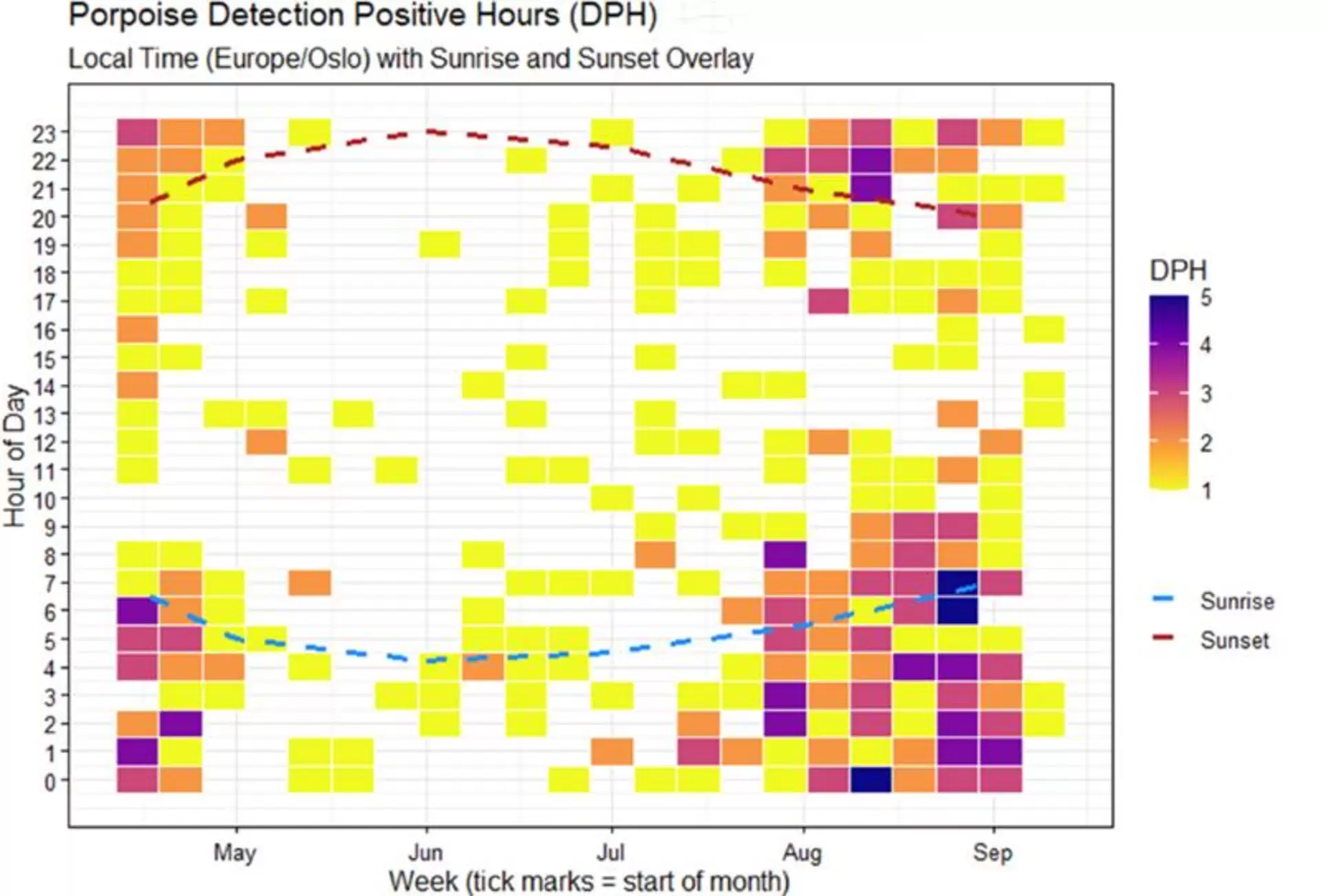
Harbour porpoise acoustic activity across months and time of day, highlighting peak vocal activity periods. Insights suggest reduced risk of harm if operations are timed during lower-activity windows
Unlocking biodiversity through genetics
We’ve seen similar benefits in our collaboration with the Molecular Marine Ecology team at Wageningen University, as part of BeWild - a Mission-driven Research, Development and Innovation (MOOI) subsidy programme from the Dutch Enterprise Agency (RVO). By combining the marine technology expertise of Martijn van Boven and our innovation team with Reindert Nijland’s deep knowledge of environmental DNA (eDNA) sampling, we developed a simple but rugged eDNA sampler with many advantages over existing tools.
The collaboration between Fugro, and project partners, which includes Wageningen University, CrossWind, The Rich North Sea, Mecal and Seekable - has also helped Daniel van Berkel and Auriel Sumner-Hempel at Wageningen University to further develop the genetic database of marine species. This is particularly important for species of concern to offshore wind developers, which need to be monitored for projects in the North Sea.

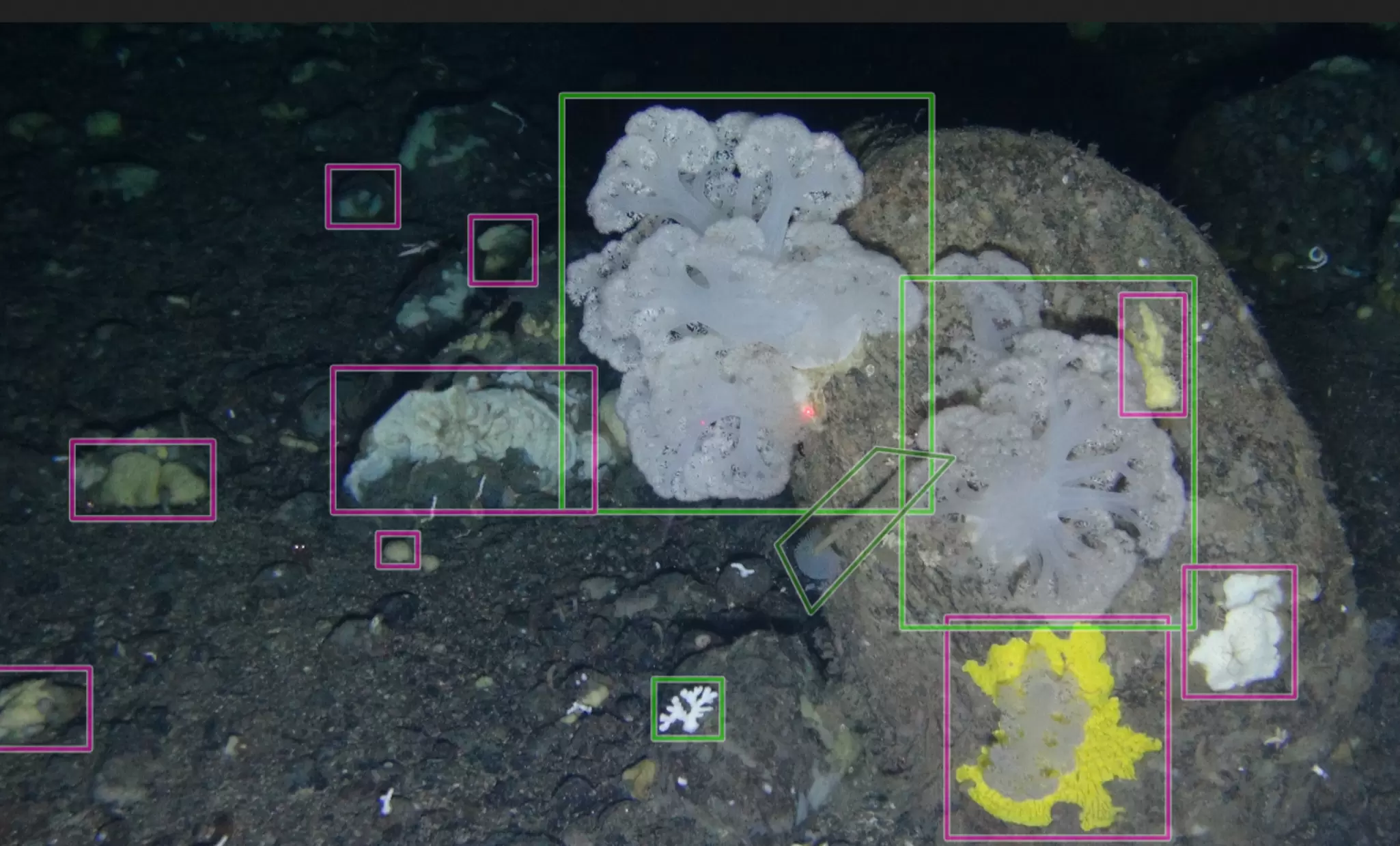
Image captured from BeWild survey
But who decides what biodiversity is?
This was a question put to me by Simon Bush, Professor of Environmental Policy at Wageningen University, who’s also part of the BeWild project. It sounds like a simple question at first, until you consider that the people who define policy are often working with insights based on technology that’s already several years old. Meanwhile, the technology itself is evolving rapidly. So, which one is driving the agenda? Is policy driving technology, or is technology shaping policy?
These kinds of questions (and many more) are being explored by Samantha Kristensen, a PhD researcher of environmental policy. We’re supporting her work by opening our network, and in return, she’s producing invaluable research into the social and political implications of biodiversity monitoring. Her work draws on data from the BeWild survey, which not only maps Dutch marine biodiversity but also raises public awareness and informs governance tools to better protect ecosystems around offshore wind energy parks.
Her insights have revealed policy complexities the offshore wind industry often struggles with, and it’s helped us ask better questions, like how biodiversity data can shape decision-making, influence stakeholder engagement, and support more inclusive marine governance.
Open source and machine learning
Collaboration doesn’t just mean working with academics, it also means contributing to shared platforms. When developing our machine learning approach for benthic video analysis as part of BeWild, Yulia Melnikova turned to the open-source platform BIIGLE.
Because we couldn’t share client data directly with BIIGLE, Yulia developed our own machine learning model and worked with BIIGLE to integrate it. We assembled a team of ecologists and software developers who worked iteratively, prioritising features by effort and impact.
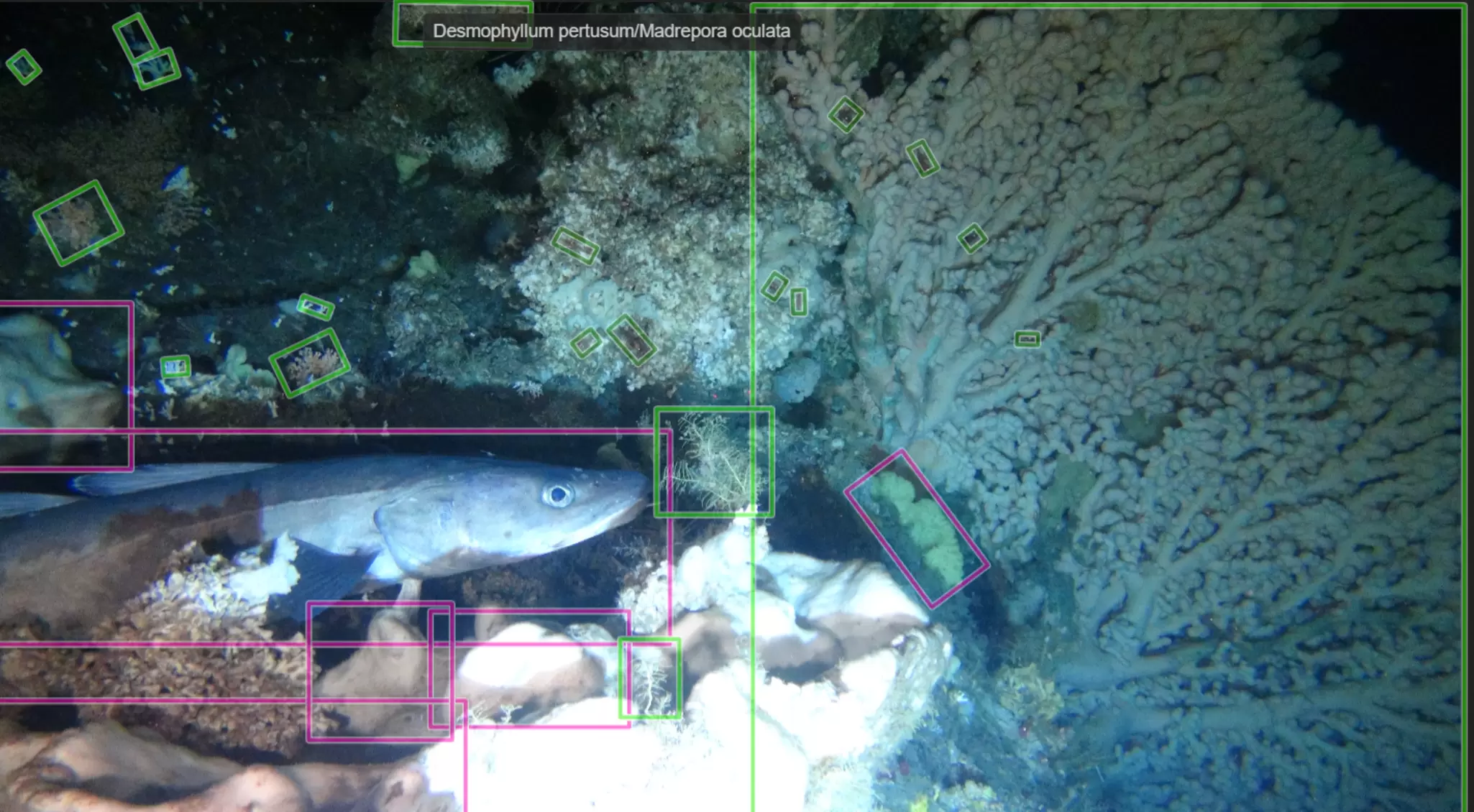
Screenshot of BIIGLE with the machine learning annotations
We realised that some interface-related features would be developed quickest by the BIIGLE team of the Biodata Mining Group at Bielefeld University. Rather than keeping those improvements to ourselves, we took a collaborative approach. We contracted a BIIGLE developer to build the features and make them available to everyone.
This didn’t just improve our own workflow, it made BIIGLE more efficient for the entire marine science community. It is also allowing us to integrate this digitised workflow into our digital ecosystem for asset inspection.
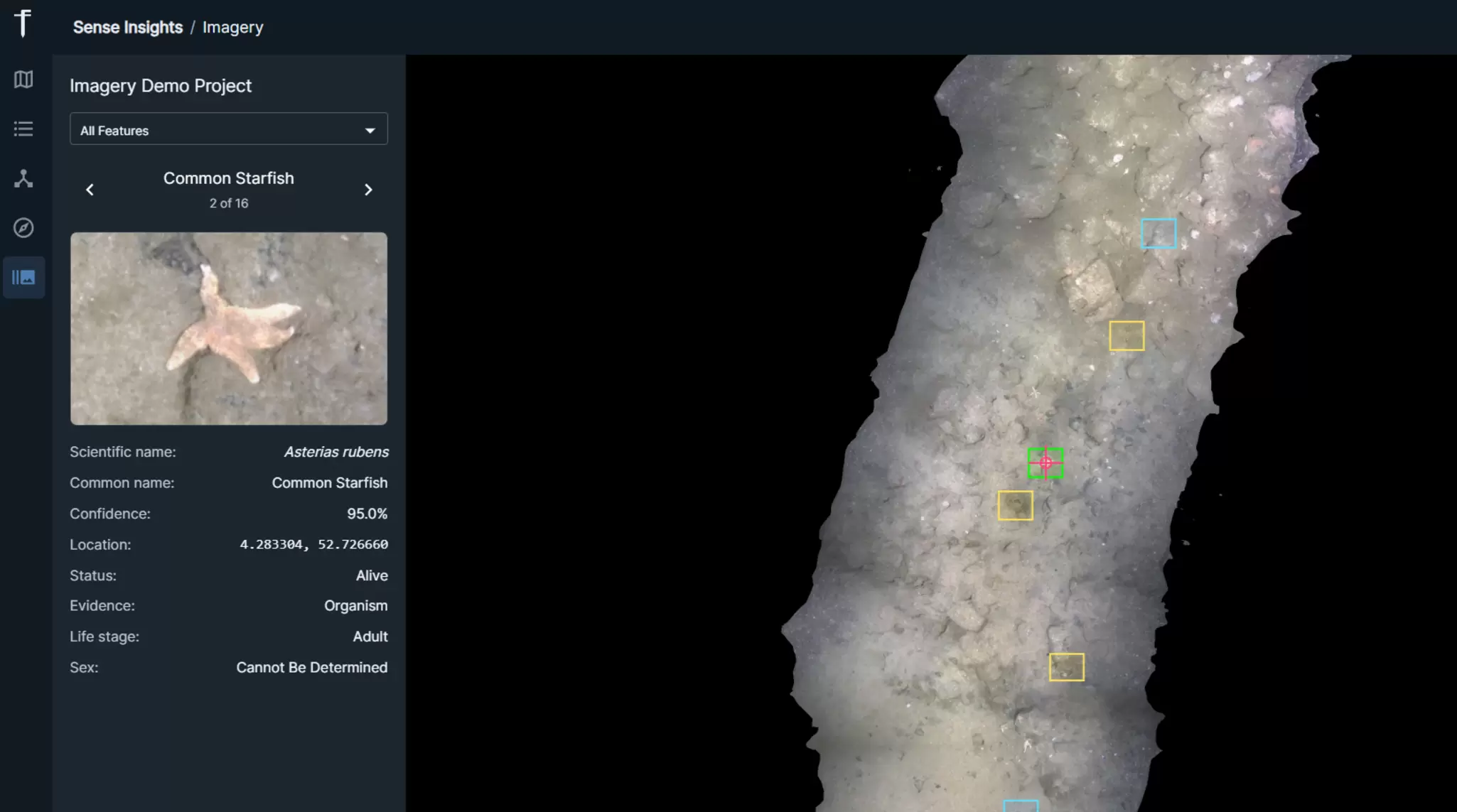
Fugro software showing a demo of the orthomosaic and species identification from the BeWild survey. In time, eDNA results will be integrated as well
Not just better, but faster
There’s a common belief that academics work too slowly to collaborate with industry. That hasn’t been my experience. Of course, if you expect groundbreaking research built from first principles, that will take time. But most collaboration isn’t about reinventing the wheel, it’s about moving proven research or technology from laboratory to demonstration, or from demonstration to scale.
Finding the right mechanism to support this transition is crucial. That’s where Grant Managers like Job Meines come in. Job helps identify subsidy opportunities early in our innovation pipeline, matching emerging technologies with funding programmes. Beyond reducing financial risk, these programmes enable us to build strategic partnerships with academic and industry players, positioning Fugro at the forefront of innovative markets.
Collaboration is leadership
Today, I see Open Innovation as a core strategy in my solution portfolio. I’m incredibly proud of what we’ve achieved through collaboration. If competitors use the open research we’ve helped produce, I won’t be frustrated, I’ll be even more proud. It is obvious now that collaboration isn’t weakness, it’s leadership.
By working together, we’re not just advancing science. We’re protecting the oceans we all depend on.
Expertise
Conserving and restoring our ocean's health
Our offshore wind biodiversity solutions support projects to assess and monitoring marine habitats. Through Geo-data, we contribute to mapping the baseline, creating an understanding of the context in which nature thrives, modelling risks, monitoring changes, and planning for nature conservation and restoration.