O‑Cell ® Testing
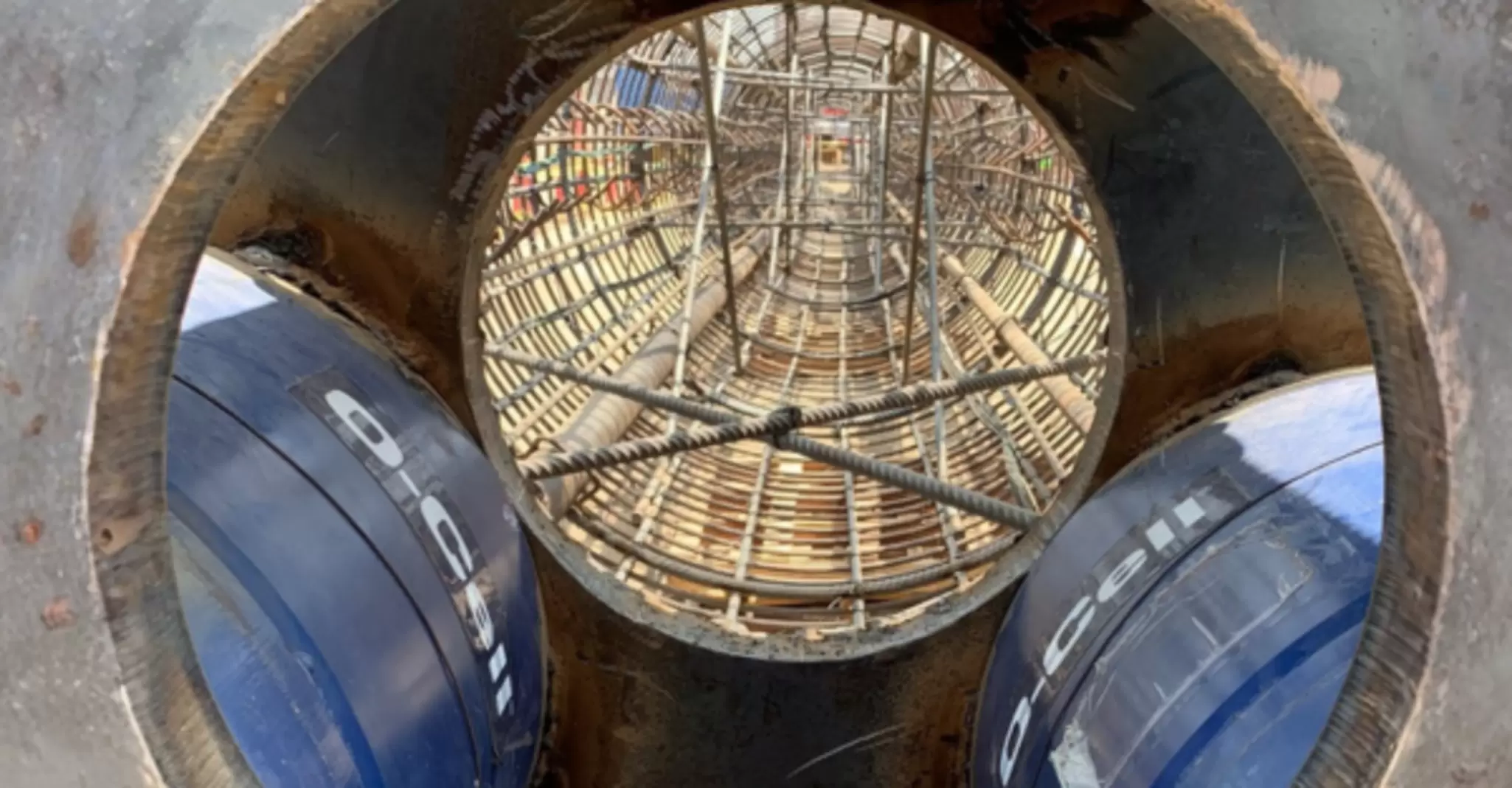
The O‑Cell ® (Osterberg Cell ®) is an innovative, bi‑directional load testing device developed to meet the construction industry’s need for a reliable method of testing high-capacity, deep foundations. Established by the experts who pioneered O‑Cell® technology, Fugro Loadtest is a leading global provider of O‑Cell® testing equipment and services. As deep foundation elements and construction projects continue to grow in scale and complexity, Fugro Loadtest delivers critical insights that support long‑term structural performance. Today, ultra‑high‑capacity foundations, which used to be rare and difficult to safely engineer, are becoming standard practice thanks to the capabilities unlocked by O‑Cell® technology.
Capabilities
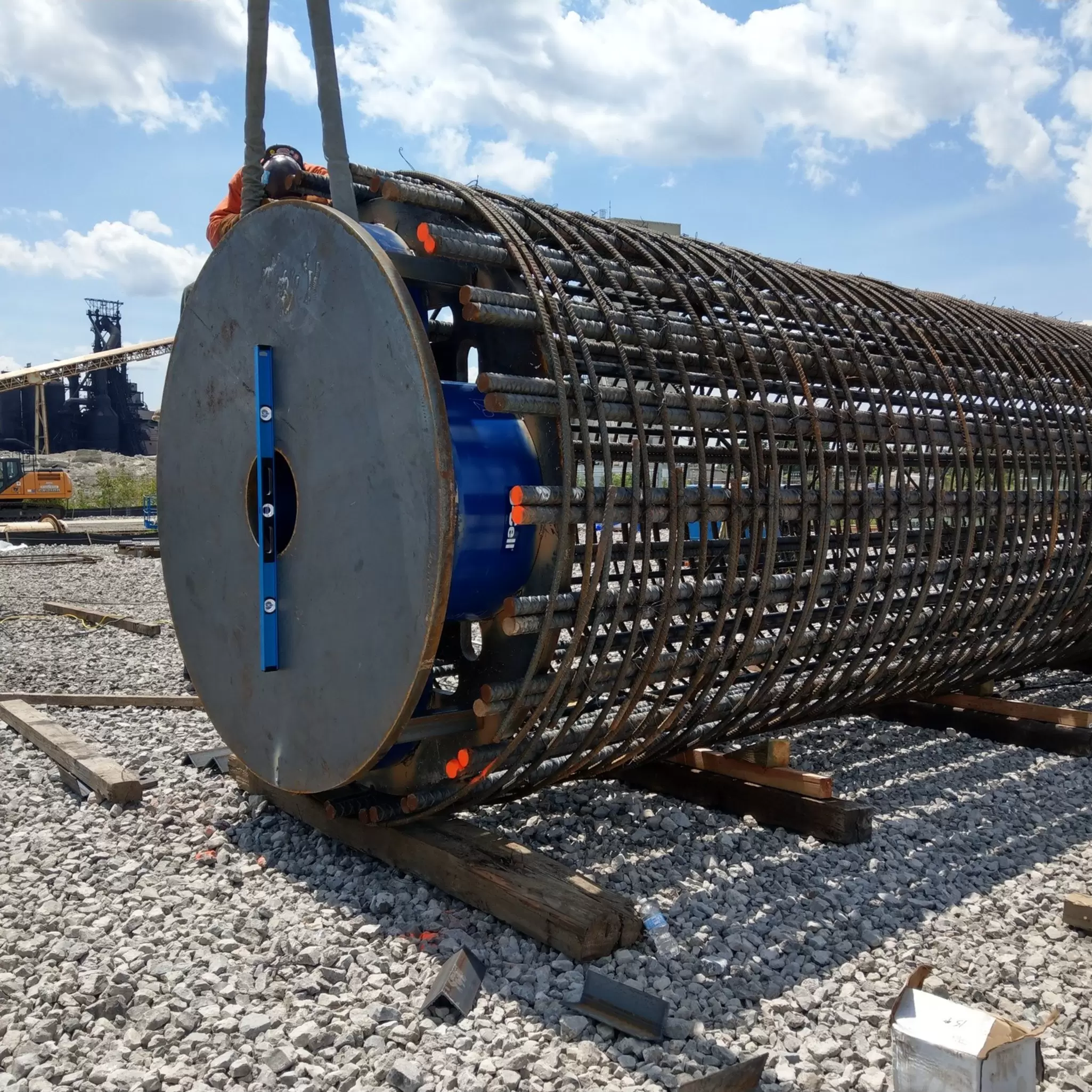
Installed within the foundation element, the O‑Cell® equipment applies pressure both upward and downward simultaneously, enabling full‑scale static load testing without the need for massive reaction systems. O‑Cell® bi‑directional testing can be used on both preliminary (expendable) and working foundation elements. After testing, the element can be grouted to restore full structural integrity, allowing it to be incorporated into the final structure.
Services
By applying load in two directions, upward against side-shear and downward against end-bearing, it provides accurate data without the need for costly reaction systems, such beams or piles. This means faster testing, a smaller site footprint, and reliable results you can act on immediately. With ISO/IEC 17025 accreditation, patented instrumented rams, and automated load control, O-Cell® delivers precision and compliance you can count on. It supports high-capacity foundations and complex projects, giving you confidence in every design decision.
Benefits
Unmatched capacity
Capable of testing piles and barrettes at loads exceeding 440 MN (100,000 kips)
Risk reduction
Detailed and reliable data means reassurance in foundation design
Efficient testing
Bi-directional testing reduces time on site, CO2 emissions and associated costs
Flexibility across project phases
Ideal for both preliminary and working tests for foundation design and construction
Features
Record‑breaking performance - holder of the world record for the highest load test using O‑Cell®: 320 MN (72,100 kips) on a single pile, and 363 MN on a single barrette.
Bi‑directional static load testing - performed simultaneously in upward and downward directions.
Full‑scale testing - without the need for external reaction systems or heavy ballast.
Restorable foundation elements - tested elements can be grouted and integrated into the final structure.
Supports mega‑pile design - enabling engineers to validate and optimise foundations for the largest modern structures.
Global expertise - 20+ years of experience and involvement in major projects across 68+ countries and access to the world’s largest international load test database enables optimised test programs and improved geotechnical risk management.
Frequently Asked Questions
What is an O-Cell® test?
The O-Cell® load test is a method used to measure the load-bearing capacity of deep foundations. Geotechnical engineers use this method to assess bored piles, drilled shafts, continuous flight auger (CFA piles), precast piles and barrettes. As this method is a bi-directional load test, we extract data from the upward force and downward force. This allows us to build load displacement curves combining uplift and compression components, helping engineers to make informed decisions on the total capacity.
An Osterberg cell is a hydraulic jack that we install inside a drilled shaft or pile. The O-Cell® (Osterberg cell) test allows engineers to measure movement (displacement), load transfer and ultimate capacity. By measuring with an upward force, as well as the equivalent top load, we can understand maximum capacity and limits that should be followed in infrastructure design.
How does O-Cell® testing differ from conventional load testing methods?
In conventional load testing methods, maximum load is applied at the pile head and a downward force is applied. This relies on reaction systems such as kentledge, anchor piles and reaction frames. This measures overall pile head load-settlement behaviour, usually combining shaft and base resistance.
O-Cell® testing applies the load internally, within the pile body, measuring upwards force against shaft resistance and downward against end bearing.
The main difference between O-Cell® testing and standard test methods is the measured behaviour and amount of equipment required. O-Cell® is usually more practical for very large or deep piles as there is no need for anchor piles or large test platforms. You also get better diagnostics from O-Cell® tests, as it separately measures shaft resistance and end bearing.
What are the advantages of the Osterberg cell test?
There are several advantages to this method of load testing, particularly if you are looking for deep foundation load testing.
No external reaction system is needed
With conventional load testing methods, a downward force is directly applied to the pile to test its load capacity. This requires the careful installation of external reaction piles or kentledge to collect data from the downward force.
The O-Cell® load test is different. A hydraulic jack reaction system is cast within the pile, eliminating the need for external reaction systems. This is not only space saving, but many don't realise significant cost savings that can be achieved throughout a project’s life cycle.
High loads possible
The main advantage of the Osterberg cell test is also related to equipment usage. Conventional load testing methods become logistically complex as pile capacities increase. When it comes to large diameter bored piles, offshore piles or barrettes, a traditional static test is sometimes impractical or impossible but often structurally risky. An O-Cell® test eliminates this risk as load paths are internal, allowing you to test higher loads and gain more accurate insight on your site or project.
Insight accuracy
In some cases, a bi-directional load test is a 'nice to have'. However, there are several examples of areas that reliable foundation capacity data is imperative to design and risk management. At Fugro we often support large infrastructure projects, such a high-rise buildings, offshore platforms and bridges, which require precise accuracy at a large scale.
Improved safety and efficiency
The O-Cell® load test is seen as safer than traditional static load tests because it removes the need for massive kentledge stacks, anchor piles or large steel reaction frames. This equipment introduces several risks to a site, including congested worksites, crane lifts and potential structural instability or collapse.
As the O-Cell® generates the load inside the pile, relying on the ground itself to produce the reaction, there's no need to use heavy equipment at ground surface level. Overall, this reduces lifting hazards, temporary work risks and onsite accidents.
Significant cost savings
As touched upon in the previous sections, there are significant cost saving opportunities with Osterberg cell testing. A traditional static pile load test requires large reaction systems. This means the process takes longer to set up, and longer to get the test results. It also requires more equipment and labour, adding to the total cost.
The O-Cell® test requires installation of specialised cells inside the pile, but once complete load testing can begin. This set up requires less personnel on the ground and is faster overall, reducing the cost of the project.
Optimise design, reduce risk, and deliver confidence with
Loadtest®
High-precision, safe, and efficient foundation testing services and monitoring solutions for new construction and remediation projects.