Case Study
Remote subsea inspections eliminate personnel risk for Brazil's largest oil producer
Brazilian coast
Client
Petrobras
To maintain the integrity of its offshore assets while reducing risk to people and the environment, Petrobras set out to remove offshore personnel from routine subsea inspection activities. By adopting a fully remote inspection model, Petrobras eliminated offshore personnel exposure, reduced emissions associated with conventional inspection vessels, and advanced a new approach to offshore asset integrity management in the Americas.
The campaign established a new benchmark for offshore inspections in the region, demonstrating that fully remote, uncrewed operations can be delivered safely and at scale.
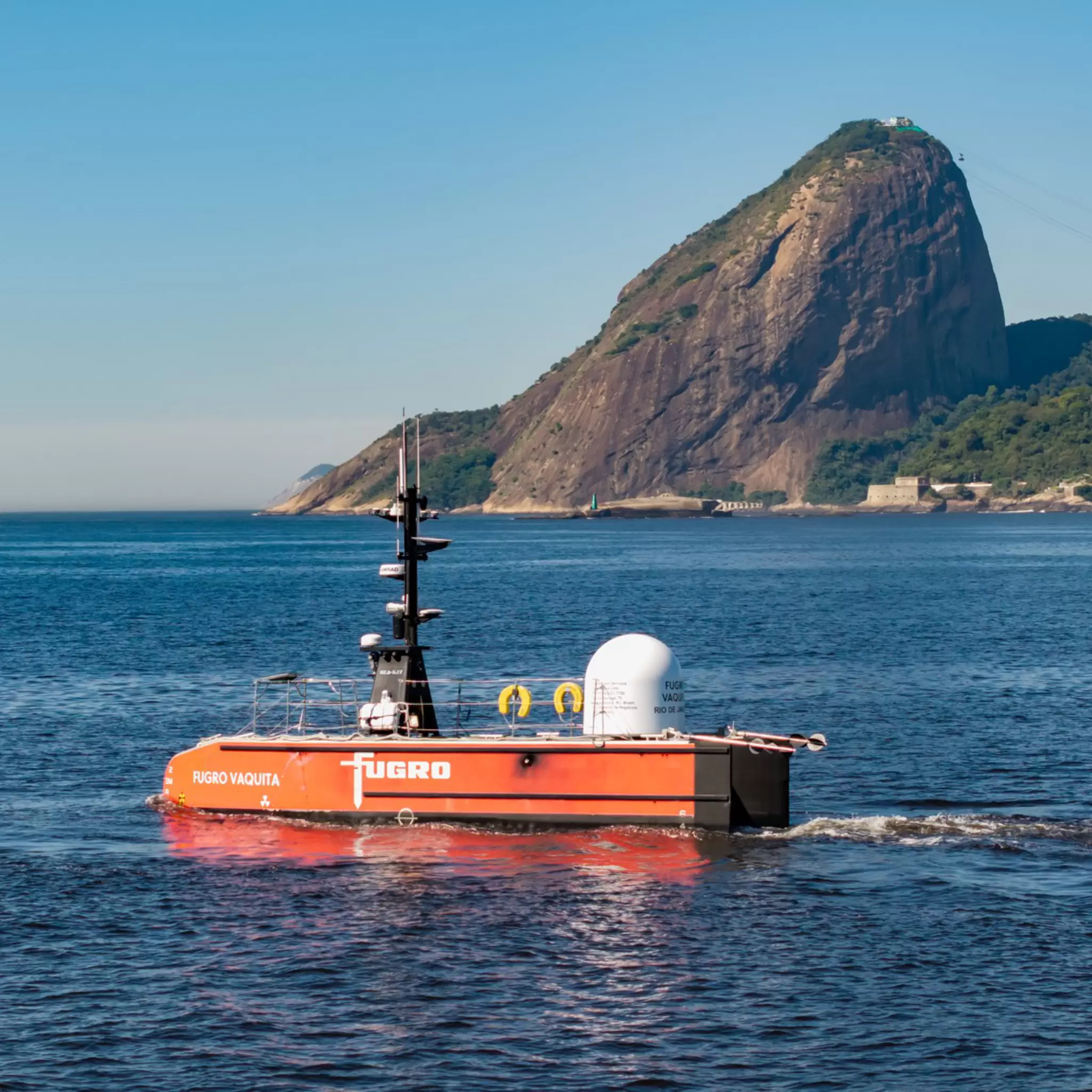
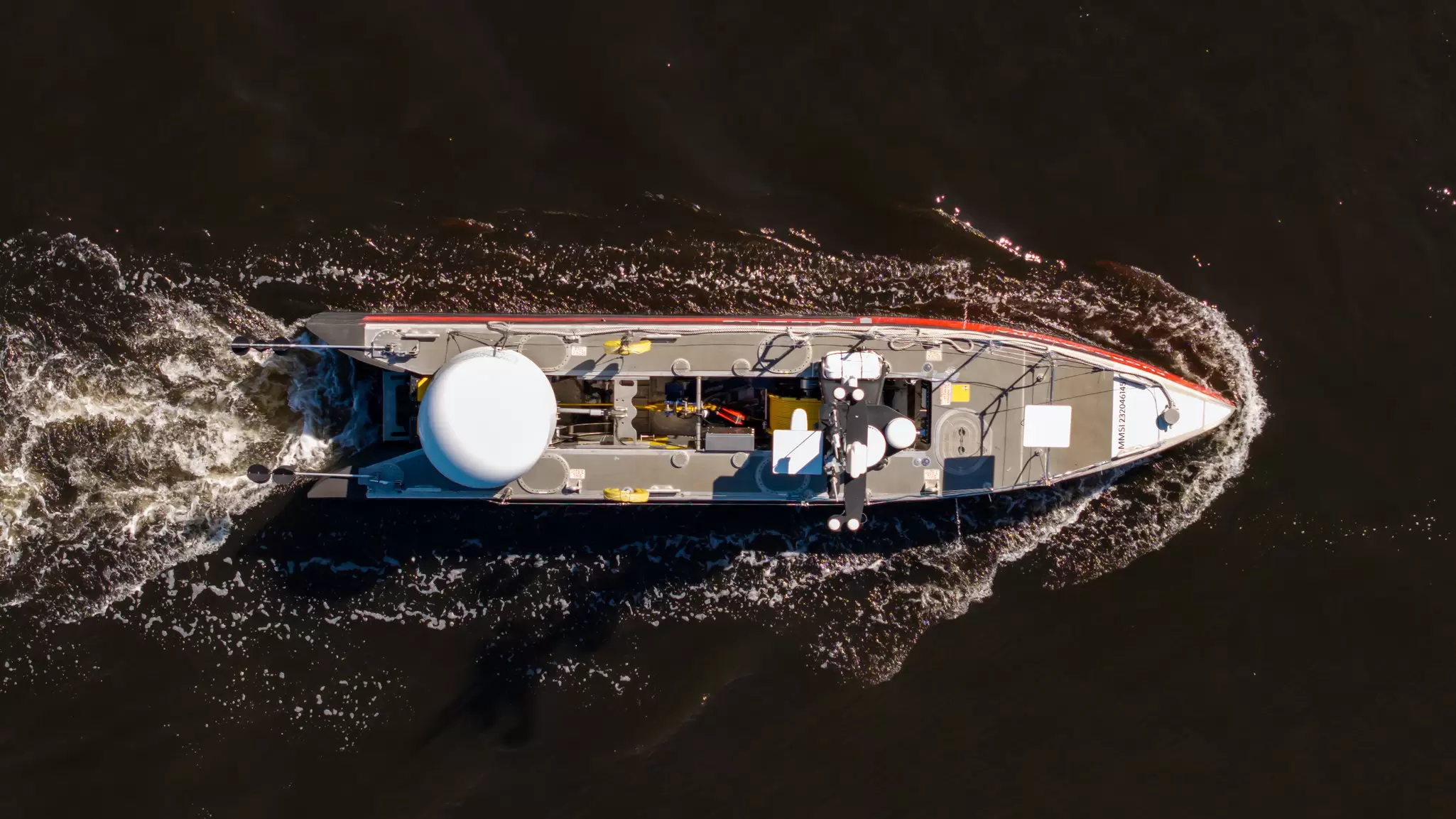
Working with Petrobras, Fugro delivered 100% remote subsea inspections using an uncrewed surface vessel (USV) and electric remotely operated vehicle (eROV), all operated from shore.
Planning, feasibility, conceptual design
Design
Construction
Operations and maintenance
Decommissioning
Show full process
Challenge
Petrobras needed to maintain the structural integrity and operational safety of its offshore platforms through routine subsea inspections, while advancing its decarbonisation objectives and reducing dependence on large crewed vessels. Petrobras required an inspection solution that could scale to meet its asset portfolio without increasing offshore personnel exposure or environmental impact.
Specific challenges included:
Offshore personnel exposure in hazardous environments during inspection campaigns
High carbon emissions from conventional crewed vessels: a remote support vessel (RSV) consumes in one day what a USV uses over 15 days
The need to expand inspection capacity without adding another crewed vessel to the programme
Finding a technology partner with the readiness level to deliver USV-based ROV operations in Brazilian waters.
Solution
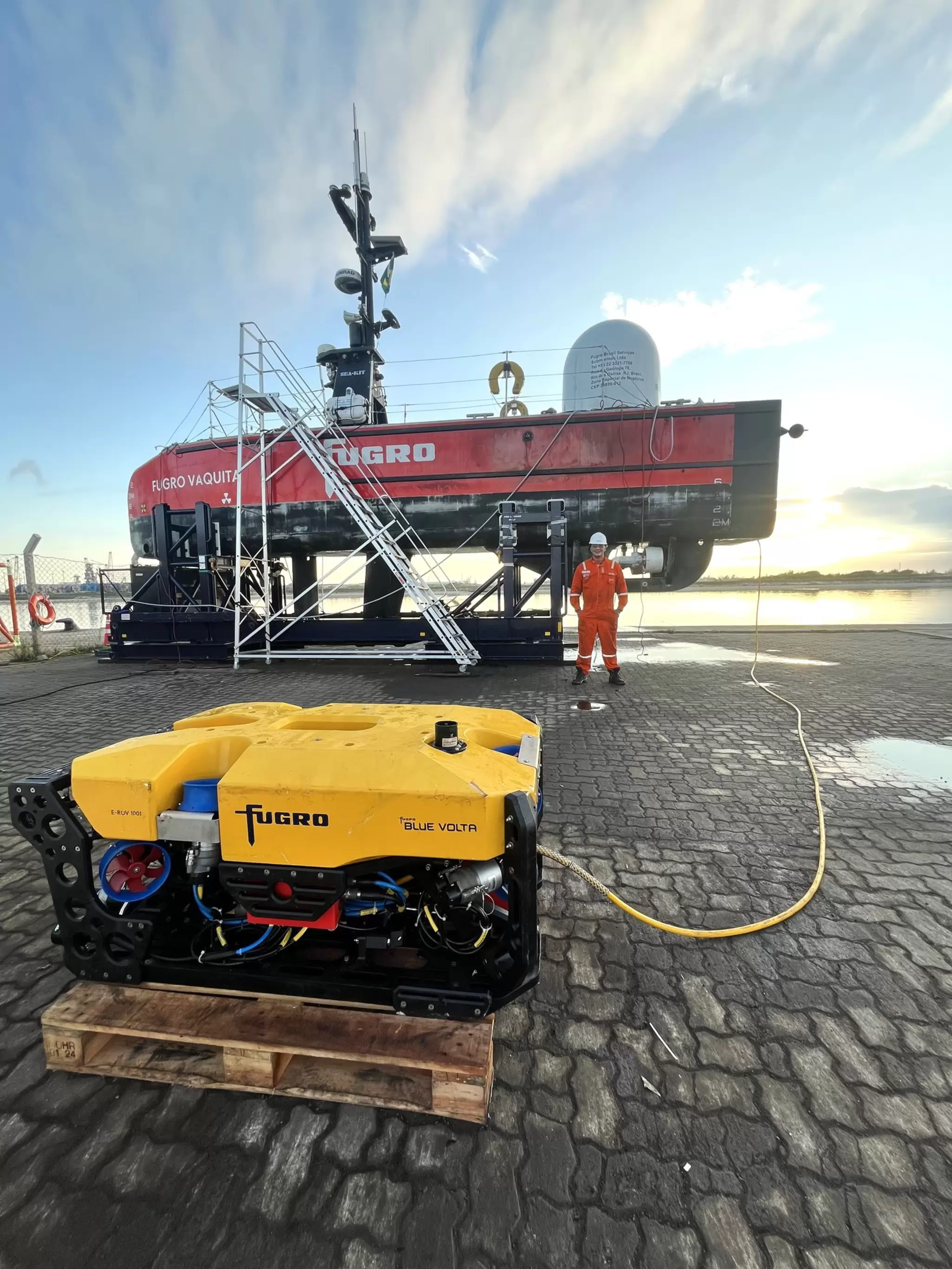
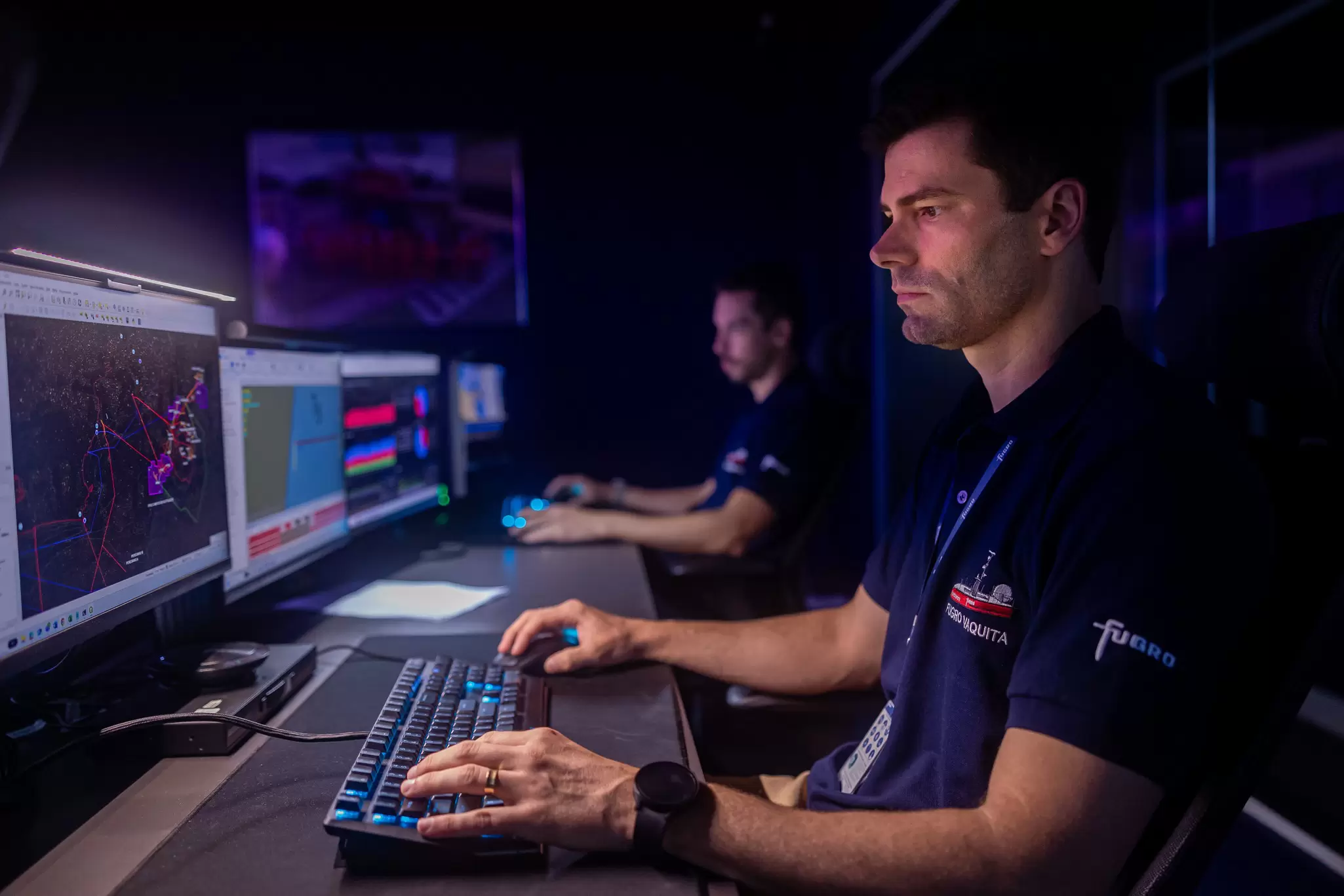
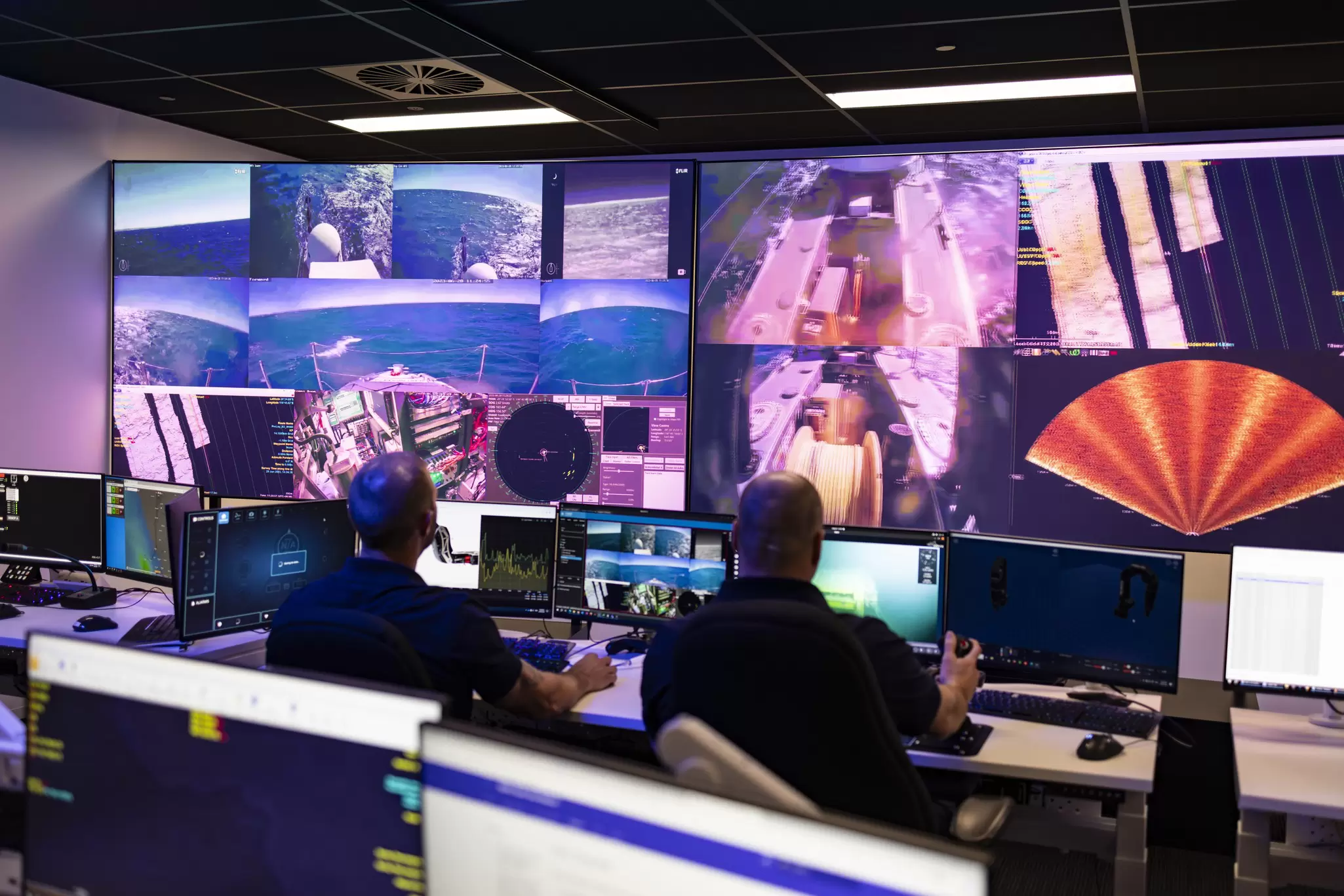
Fugro mobilised the Fugro Vaquita in February 2025 for a 330-day campaign, with all operations managed entirely from Fugro's ROC. The USV and Blue Volta® eROV provided Petrobras with fully remote inspection capability, eliminating the need for crewed-vessel support throughout the programme.
Key capabilities delivered:
100% remote operations with zero offshore personnel
Full inspection scope: visual inspection, CP measurements, and light cleaning at depths up to 250 metres across hull, jacket, and subsea equipment
Redundant communications to maintain a continuous connection between the USV and ROC
A scalable, low-emission platform that extended inspection coverage without additional crewed vessel mobilisation.
Innovative highlight
Petrobras has made robotics and remote automation a core part of its innovation strategy, seeking uncrewed solutions that reduce personnel risk and lower emissions across its operations. Fugro's USV technology provided the means to deliver on that ambition, offering a crewed-vessel alternative operated entirely from an onshore control centre, with no personnel on board at any stage.
When Petrobras evaluated all contractors for USV capability, only Fugro demonstrated the Technology Readiness Level (TRL) required to deliver the programme, leading to its selection as the sole provider. The resulting campaign was the first USV and ROV operation of its kind in the Americas, successfully validating the concept for the region.
The fully remote model also expands opportunities for workforce inclusion, enabling professionals with disabilities to participate in offshore inspection activities from an onshore environment.
Results
By January 2026, the Fugro Vaquita had completed 46 operations covering hull, jacket, and subsea equipment inspections at water depths up to 250 metres, all conducted 100% remotely with zero safety incidents.
Eliminating offshore personnel across the campaign removed 15,400 offshore man-hours of exposure. On the environmental side, the USV's lower fuel consumption compared to a conventional crewed vessel resulted in 4,050 tCO₂ avoided, equivalent to taking approximately 2,000 cars off the road for a year.
The campaign also delivered transparent operational learnings: the ROV's tool package presented some capability constraints, and the USV's transit speed and port time were identified as areas for development in future deployments.
Impact
The Fugro Vaquita campaign set a new benchmark for offshore asset integrity management in the Americas and demonstrated that fully remote, uncrewed inspection technology can perform at scale in the region. For Petrobras, the programme validated a model that can reduce reliance on large crewed vessels across its asset portfolio, supporting both its safety commitments and its CO₂ reduction targets.
The lessons learned from this first campaign, on both USV performance and ROV tooling, directly inform the next generation of deployments, positioning the technology for broader application across the offshore energy sector.
Key metrics:
46 operations completed
15,400 offshore staff-hours eliminated
4,050 tCO2 avoided (approx. 2,000 cars/year)
Zero safety incidents.
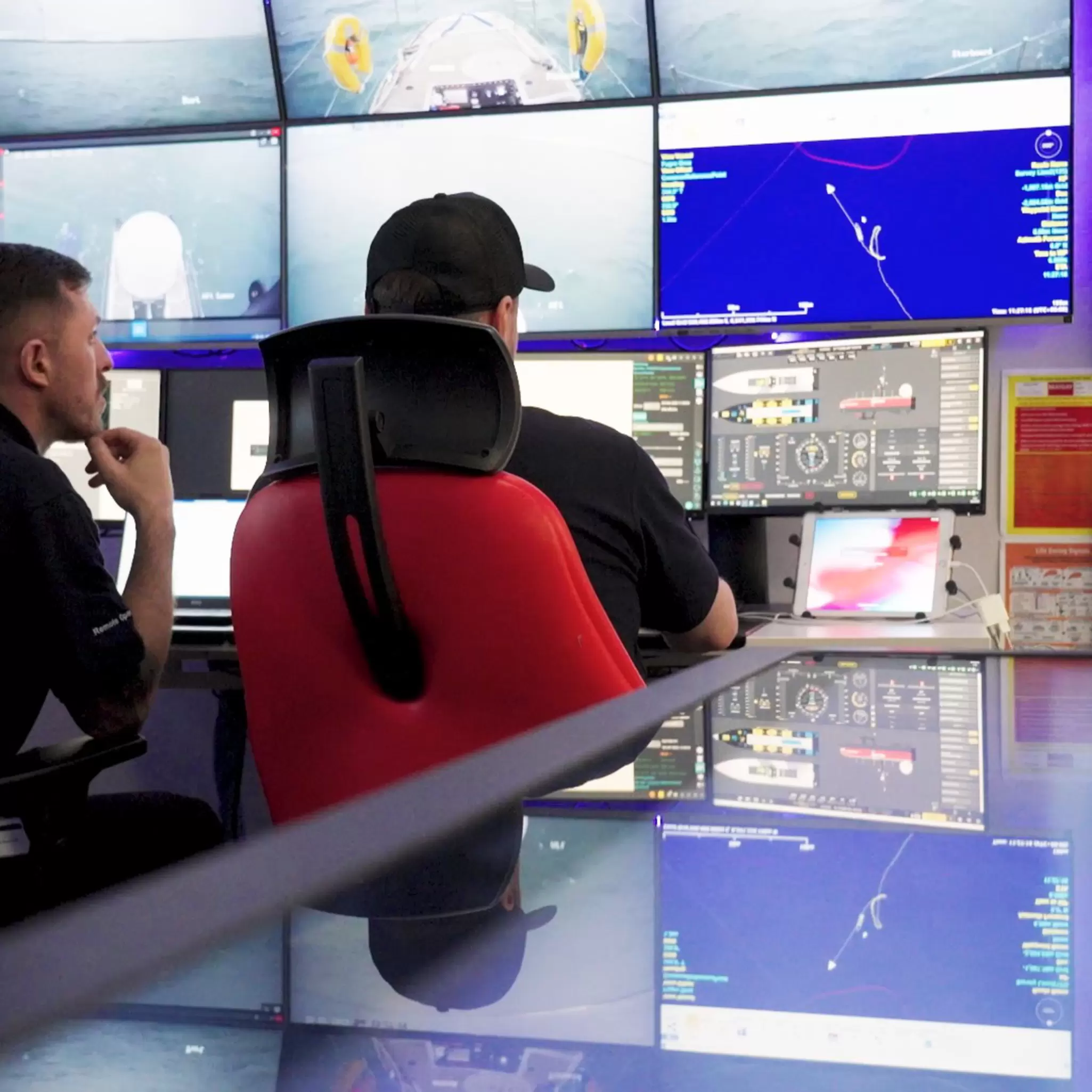
Transitioning to a new operational model
The marine industry is undergoing a significant transformation due to recent technological advancements, leading to a growing trend of automation and remote management of numerous offshore tasks. This safer, more efficient and greener approach is also greatly enhancing employee wellbeing at Fugro. In fact, we’ve made it the cornerstone of our new operational model. Putting our people first.