Case study
Powering smarter design in hurricane-prone waters
Gulf of Mexico
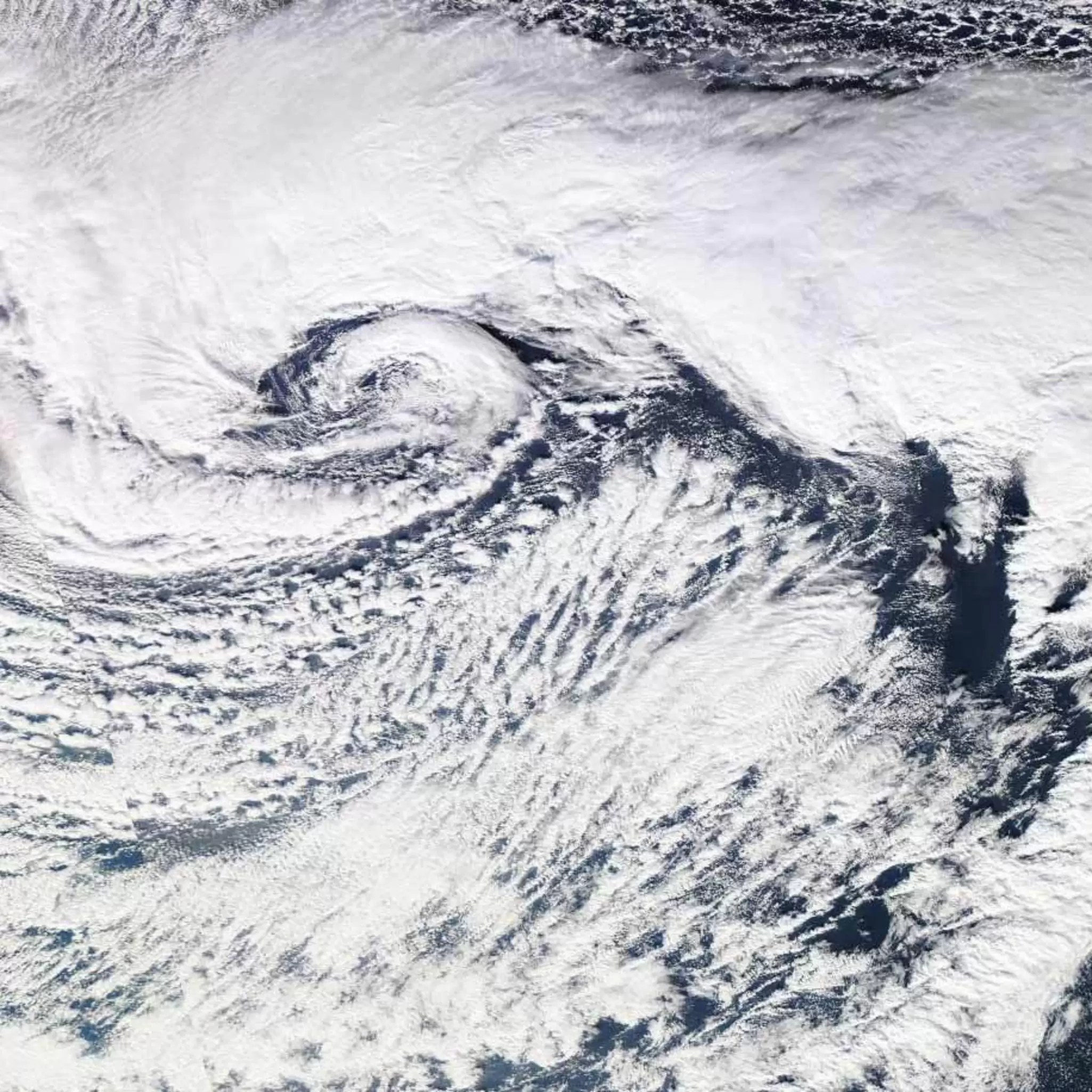
The Gulf of Mexico faces some of the world’s most powerful hurricanes, posing serious risks to both communities and critical infrastructure. Its unique geography, bordered by Mexico, the USA, and Caribbean nations such as Cuba and The Bahamas, means storms in this region have a high likelihood of making landfall, increasing their potential for destruction.
Planning, feasibility, conceptual design
Design
Construction
Operations and maintenance
Decommissioning
Show full process
For offshore and coastal infrastructure, accurate historical storm data is essential to ensure safe, reliable, and cost-effective design. To meet this need, we developed a comprehensive tropical revolving storms (TRS) database, offering a continuous and detailed representation of storm evolution.
Limitations of traditional models
For decades, the offshore energy industry has relied on parametric models to simulate cyclonic activity. These models estimate wind fields around a hurricane’s eyewall - the area of most intense weather - using values such as maximum wind speed, storm radius, and minimum pressure.
However, parametric models have limitations:
They struggle to capture wind changes away from the storm’s track
They do not fully account for the complex timing and location of TRS events
They rely heavily on data from the National Data Buoy Centre, which has limited coverage in the Southern Gulf of Mexico.
These gaps make it difficult to design infrastructure in the southern part of the Gulf, where data is sparse.
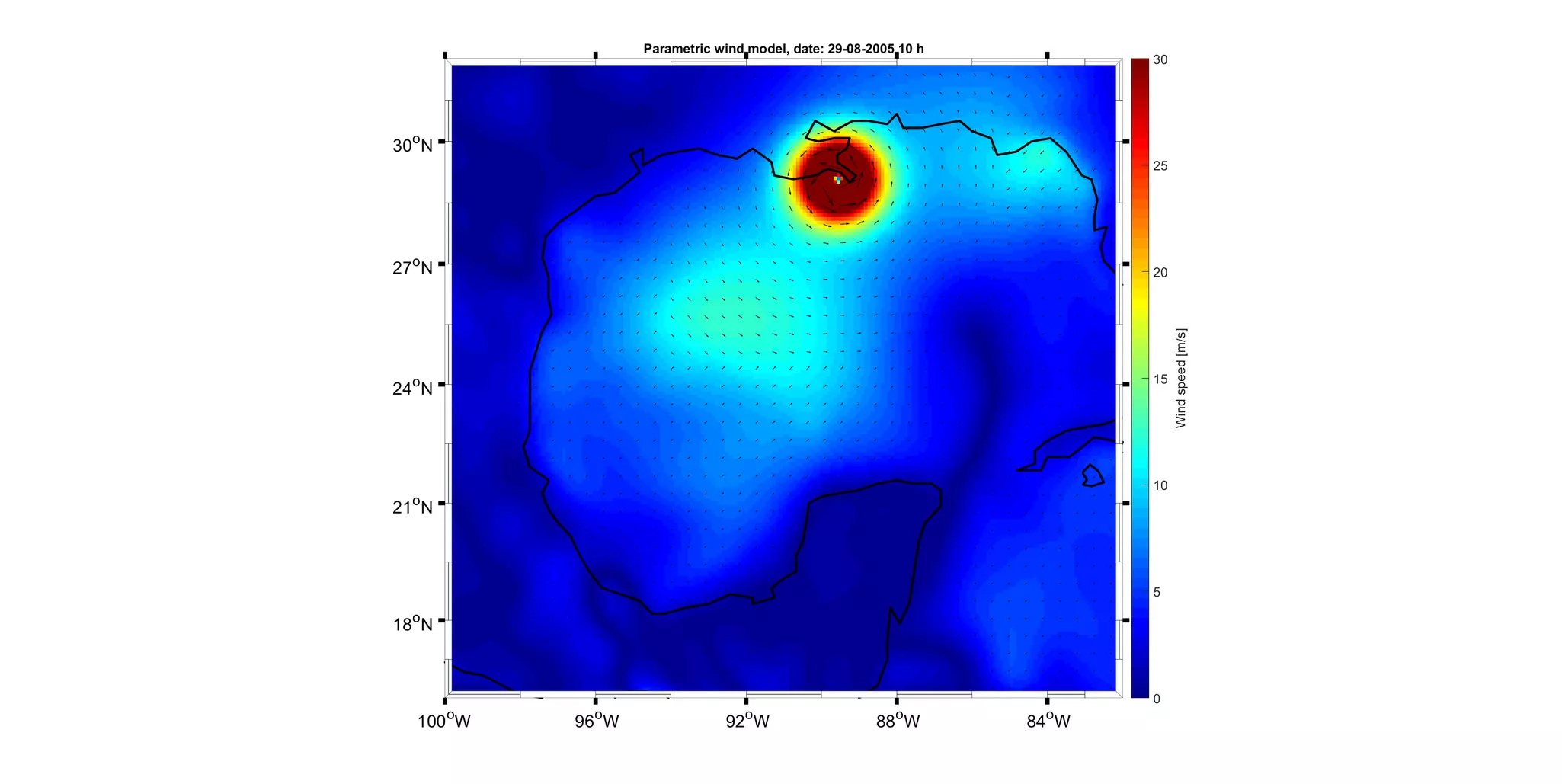
Parametric model of Hurricane Katrina
A new approach: Dynamical modelling
To overcome these challenges, we recognised the need for continuous, high-quality simulations of storm development. We created a comprehensive database using the weather research and forecasting (WRF) model, a numerical weather prediction system, to simulate every TRS in the Gulf from September 1975 to February 2020.
While WRF has been used before for storm modelling, our 45-year, event-by-event simulation provides an unprecedented level of detail. We then used these outputs to drive both a wave model and an ocean circulation model, which are fully integrated into the database.
Traditional storm databases in the region typically rely on driven models, which depend on measured data. However, considering the limited data coverage in the Southern Gulf, these models are forced to rely heavily on information from the Northern Gulf, creating gaps in accuracy and reliability.
Our approach is different. The database is built on a dynamical model, which uses the laws of physics rather than measured data. This makes it unique in the Gulf of Mexico and ensures consistent, accurate coverage across the entire region, including the Southern Gulf.
Key metric
TRS events in the Gulf of Mexico from September 1975 to February 2020
Driving safer, smarter offshore design
Our database is transforming how offshore and coastal structures are designed. By providing engineers with accurate, physics-based storm simulations, it enables them to predict extreme conditions with far greater confidence. This means platforms can be positioned to withstand the most severe wave and wind forces, pipelines can be routed to avoid high-risk zones, and coastal defences can be designed to reduce the risk of catastrophic failure during hurricanes.

WRF wind field for Hurricane Katrina. Wind speeds near the eye reach about 30 m/s. Katrina was a Category 5 hurricane with maximum winds of 280 km/h, making it one of the most powerful storms recorded in the Gulf of Mexico
This commitment to advancing offshore safety and reliability has also been recognised by the American Society of Mechanical Engineers, which awarded our work the Arthur Lubinski Award of Excellence, a testament to the impact our solution is having on the industry.
For clients, the benefits are tangible: reduced downtime, lower maintenance costs, and improved safety for personnel and assets. Crucially, the database offers full coverage of the Gulf giving operators access to reliable data wherever they work. This level of insight helps avoid costly overdesign while ensuring compliance with rigorous safety standards.
As the offshore industry faces increasingly unpredictable weather patterns, our solution provides the confidence and clarity needed to design infrastructure that remains resilient in the face of future storms.
Contact us
Find out more

Neville Smith
Global lead - Weather forecasting
Weather Forecasting
Planning weather-sensitive operations? Dealing with changes in weather conditions at your project site? Fugro’s accurate weather forecasting expertise will help you operate safer and more efficiently. Both onshore and offshore.