Case study
Benchmarking optical clocks with AtomiChron®
Adelaide, Australia

When the University of Adelaide needed a reliable timing and frequency reference for their optical clock laboratory, they turned to Fugro’s AtomiChron® High Accuracy service, a precise time synchronisation and authentication solution. With minimal hardware and fast setup, they were able to benchmark some of the world’s most precise optical clocks without the cost or complexity of traditional systems.
Planning, feasibility, conceptual design
Design
Construction
Operations and maintenance
Decommissioning
Show full process
The University of Adelaide is developing various ultra-precise optical atomic clocks for portable applications, including ytterbium vapour clocks and laser-cooled ytterbium beam clocks. These demand tools that can measure long-term frequency instability below the 10⁻¹⁵ level. That’s a rare capability in commercially available frequence reference systems. But AtomiChron® delivered exactly what they needed.
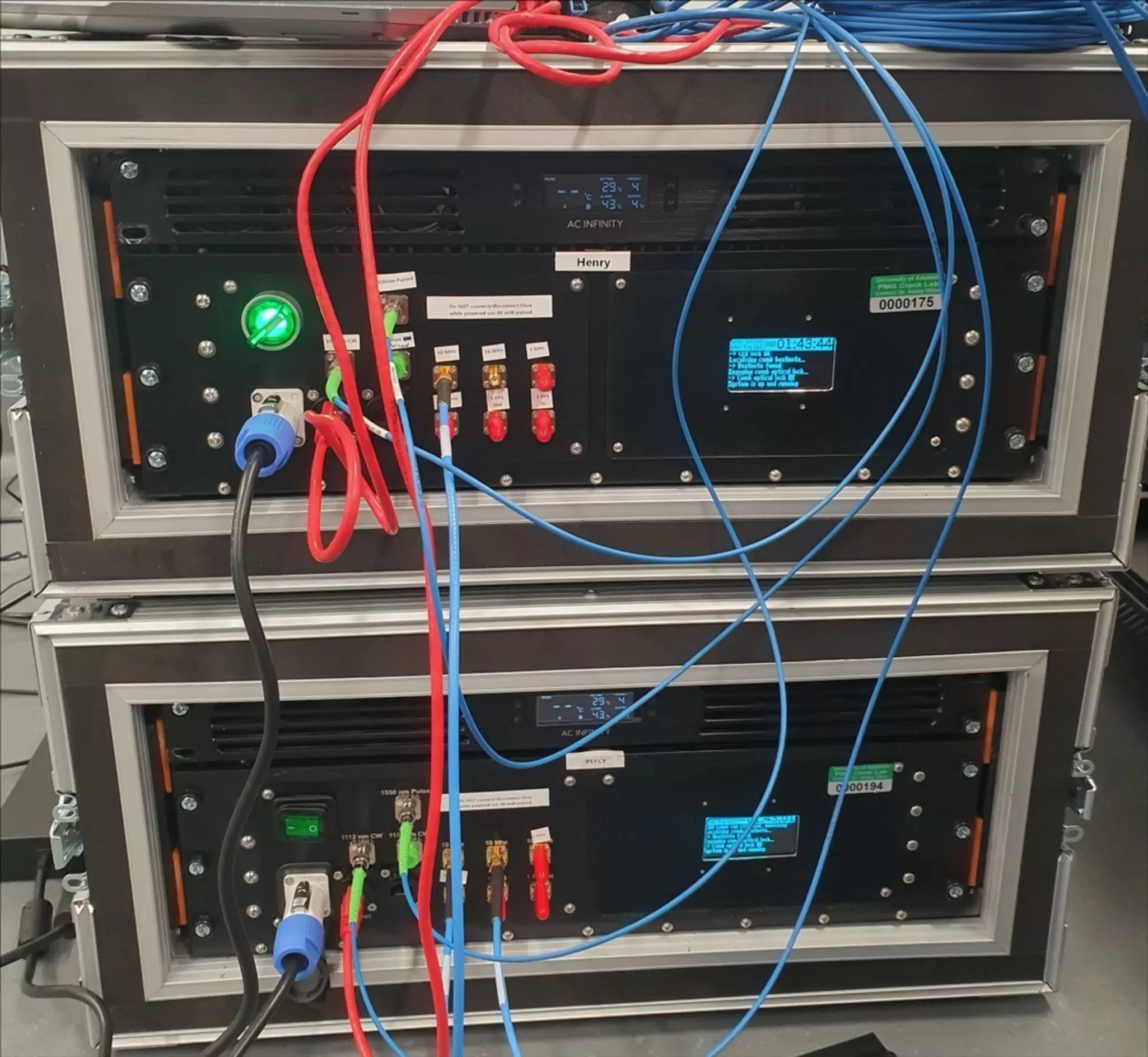
Two portable ytterbium vapour clocks packaged for a field trial
A smarter alternative to hydrogen masers
Hydrogen masers are often used for this kind of work, but they’re expensive, hard to source, and slow to deploy. AtomiChron® provided a smarter alternative. Built on GNSS technology, it delivers resilient, accurate, and reliable time and frequency for demanding applications. By eliminating time drift and offering frequency stability that rivals high-calibre caesium clocks and approaches hydrogen maser performance, it enabled the team to compare results in real time with national metrology institutes and laboratories worldwide. This capability helped the University of Adelaide validate findings and strengthen confidence in their data.
“Fugro AtomiChron® offers us the performance we could else only get with a hydrogen maser clock, which is much more expensive and has a long lead time. The AtomiChron® solution is perfect for our laboratory application,”
— Dr Nicolas Bourbeau Hébert, Signals and Control Engineer, University of Adelaide
Real-time global benchmarking
This global connectivity is a major advantage. It allows researchers to benchmark their systems against internationally recognised standards and collaborate with other laboratories working on precision timekeeping. As optical clock technologies move closer to real-world deployment, this kind of cross-validation is more important than ever.
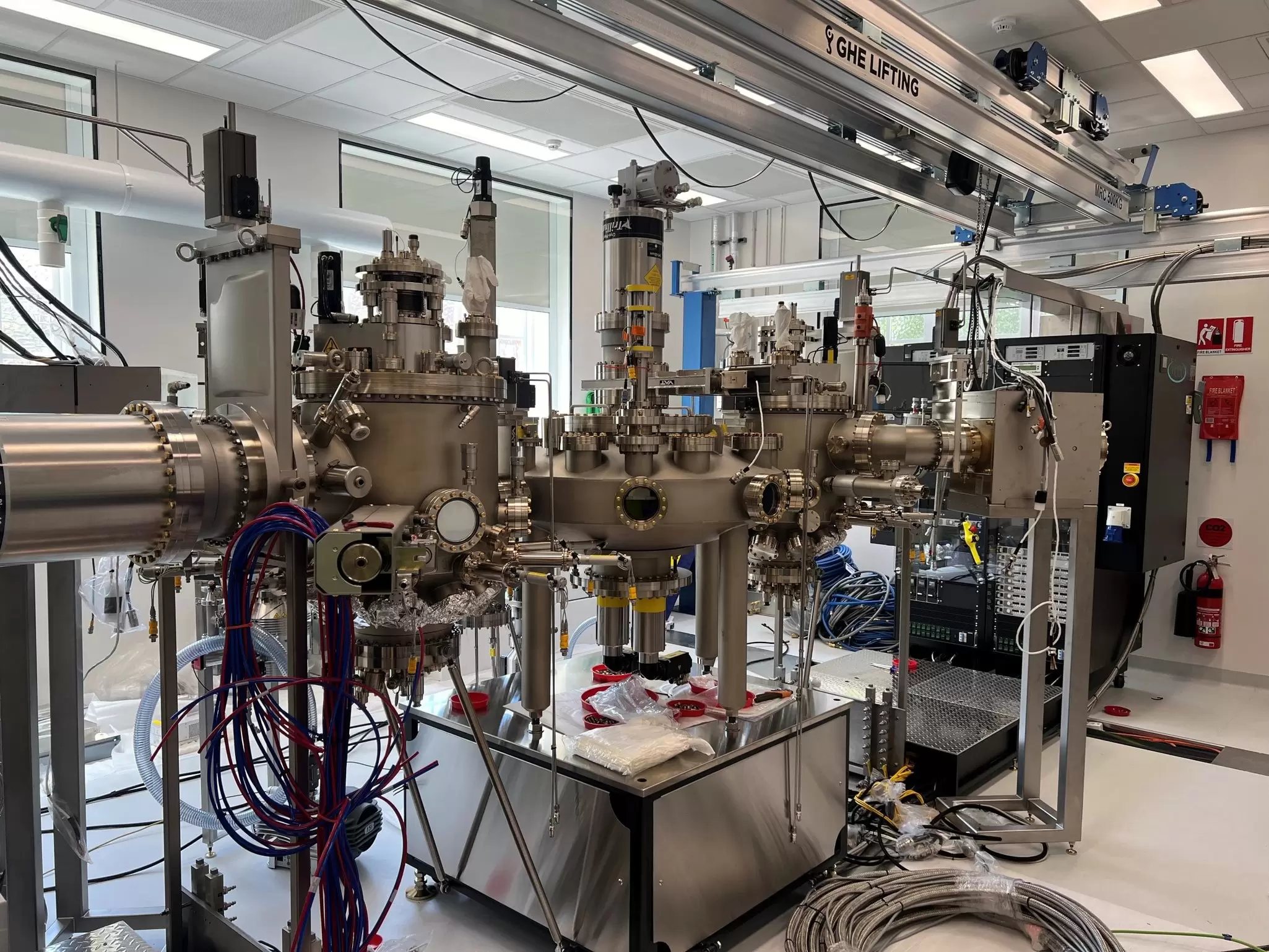
University of Adelaide – Quantum Materials Laboratory
Simple, sustainable, and scalable
The service also fits easily into existing workflows. No heavy infrastructure. No complex setup. Just fast, flexible access to the precision they need. That simplicity means researchers can stay focused on innovation, not logistics.
The remote access model of AtomiChron® also supports sustainable research practices. By reducing the need for bulky equipment and travel, it helps laboratories minimise their environmental footprint while maintaining scientific rigour. It’s a practical solution that aligns with the growing demand for efficient, scalable technologies in advanced timekeeping.
What AtomiChron® helped them achieve:
Characterise frequency instability below 10⁻¹⁵
Measure nanosecond-level time instability over long durations
Benchmark against global standards in real time
Avoid the cost and delays of hydrogen masers
Get started quickly with minimal infrastructure.
Driving innovation in precision timekeeping
For teams working at the frontier of precision timekeeping, AtomiChron® offers a rare mix of accuracy, simplicity and global reach. It’s a tool that helps researchers stay focused on what matters most, developing the next generation of optical clocks.
Contact us
Find out more

Roel de Vries
Business Developer AtomiChron®

Fugro AtomiChron®
This innovative technology eliminates time drift caused by clocks counting time at slightly different rates and gives users access to extreme frequency stability as well as extreme accurate time references, with levels that surpass high-calibre industrial standard caesium clocks and approaching hydrogen maser performance.